

iNet Network Scanner 4.0.4 — Mac version
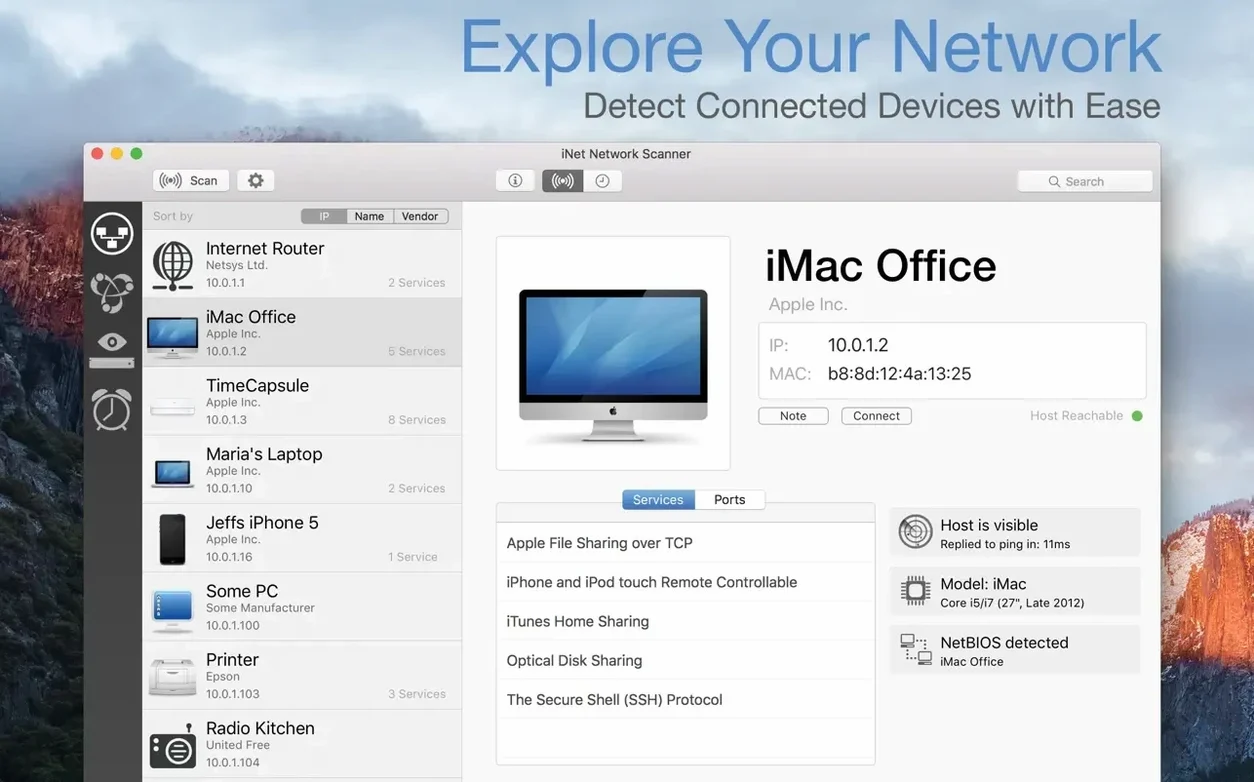
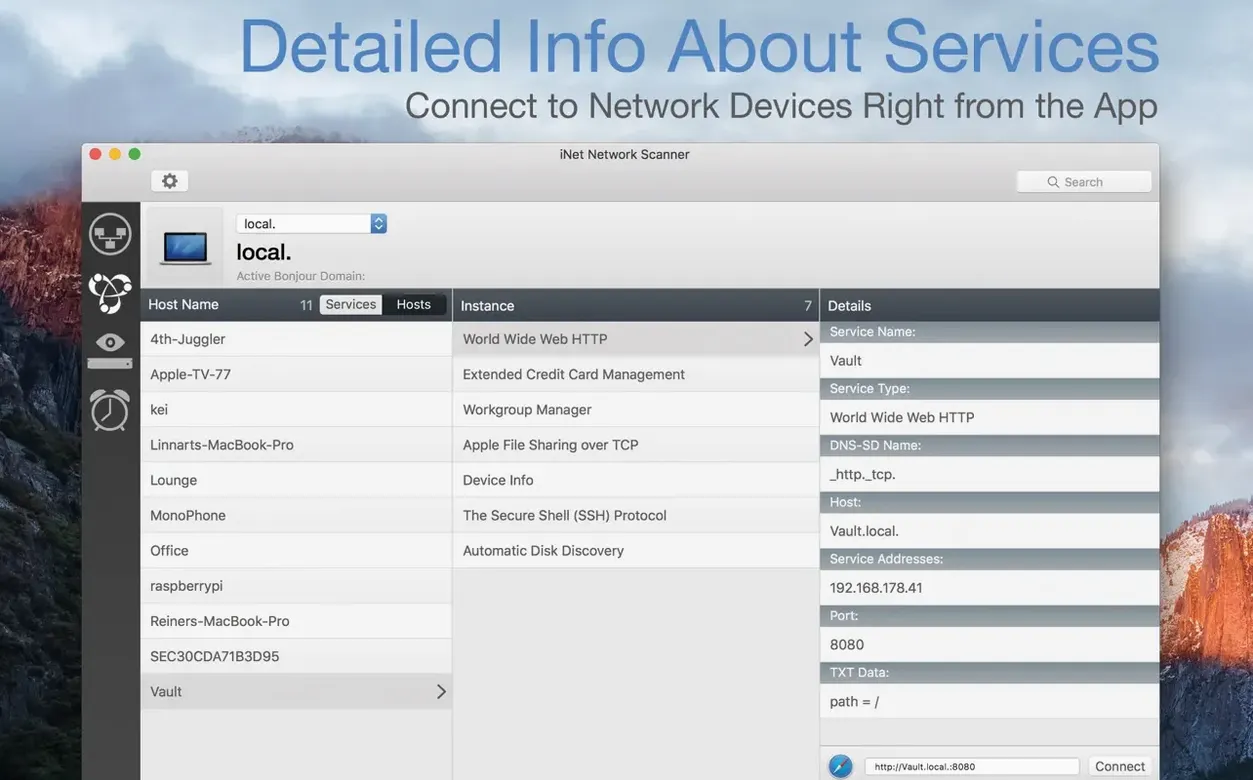
iNet Network Scanner is a Mac app that shows you every device connected to your local network, along with its name, IP address, hardware maker and the Bonjour services it is running.
It is built for people who need a clear map of what is on the wire — whether that is a home with too many smart gadgets to count, a small office that has lost track of a printer, or a repair café volunteer wondering why a donated laptop will not talk to the file server. The scan runs at a low level, so it can even spot a Mac that has been set to hidden mode.
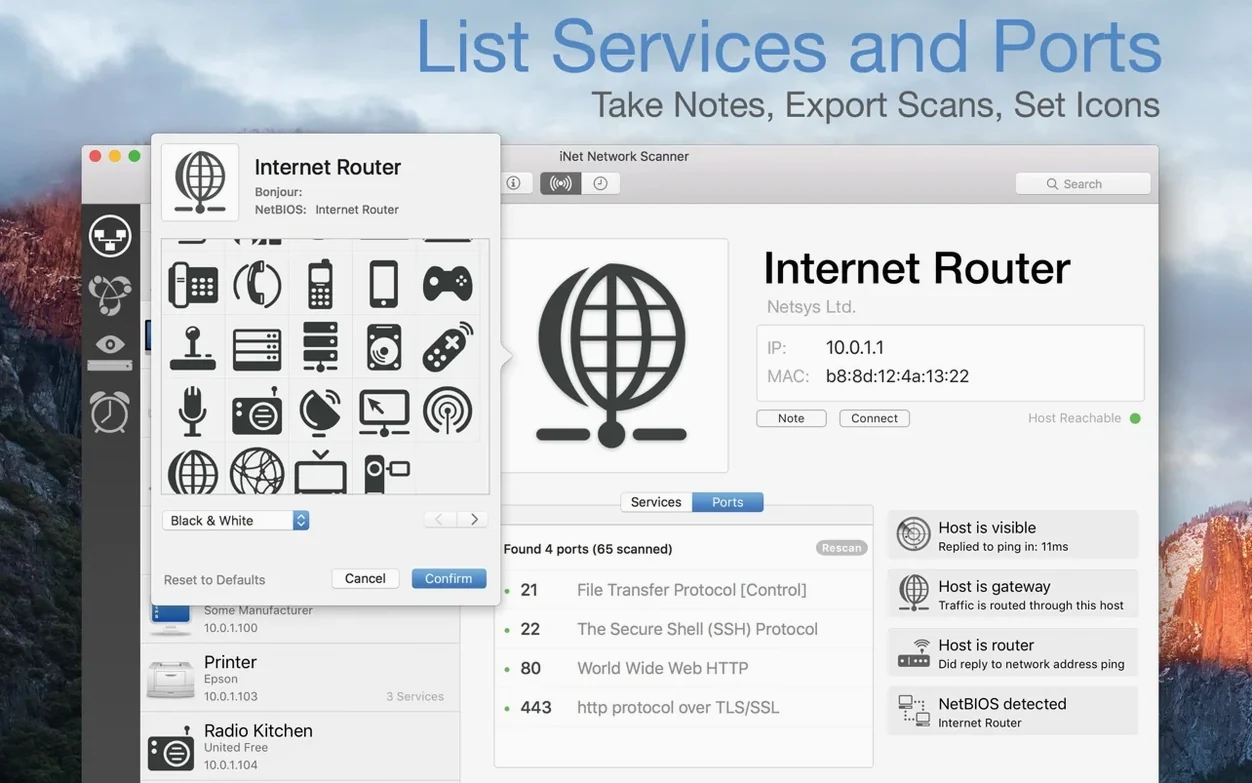
Tap on any device and you can drill into open ports, see running services and send the results by email if you need to share them with someone else. The built-in help is thorough, which matters when you are standing next to a patch panel and just want an answer without hunting through forums.
The current version, 4.0.4, runs on Apple Silicon and Intel Macs with macOS 12.4 or later. The interface is English only, but it gets out of the way and lets the network do the talking.
Starting a scan to unmask a mystery device on your network
Picture a Tuesday evening. The wi‑fi feels sluggish and a mystery device has appeared in the router’s client list. You open iNet, hit Start Scan, and wait ten seconds while the table fills.
A row catches your eye: a device labelled unknown-08-6b with an IP from the guest range. You click it. The vendor column now says Shenzhen IoT Co. — an old smart plug you forgot you had plugged in behind the sofa. No panic, just a tidy‑up job.
Next you spot the kids’ ageing Windows laptop hogging three Bonjour services. A right‑click, then Port Scan shows port 445 wide open and a couple of high‑numbered ports you do not recognise. You jot the port numbers down, close the laptop lid for now, and move on.
Finally you check the Raspberry Pi that runs the bike‑library booking system. Its hostname shows up with a green dot, SSH on port 22 is responding, and the Bonjour browser confirms the web interface is advertising itself. You email the scan summary to yourself — a habit that has saved Saturday‑morning troubleshooting more than once.
Copying an IP address to use in another tool
iNet does not try to be a Swiss Army knife for everything. It scans and identifies; you then take what you learned into the tool that fits the job.
Copy an IP address from the device list and paste it into Terminal for an ssh session. Drag a MAC address into Notes alongside a scribbled label like “printer, back room”. The email export is plain and readable, so you can forward it to a colleague or drop it into a shared Reminders list for a Sunday‑morning network tidy‑up.
Wake on LAN plays nicely with headless Macs. If the old Mac mini that serves the bike‑library catalogue has fallen asleep, a click in iNet wakes it before you even reach the shelf. Sleep on LAN works the other way — Mac only — and saves a walk across the room when you are shutting things down for the night.
The built‑in Bonjour browser complements Apple’s own tools. Where Finder shows you shared folders, iNet shows you the raw services underneath: _http._tcp, _smb._tcp, _printer._tcp and whatever else the devices on your network are shouting about. It is the kind of detail that helps when an iNet Network Scanner torrent Mac search lands you here because you need to see beyond the friendly names.
- Manufacturer detection improved — it can now reach MAC addresses on devices running iOS 27.
- Port scanning is quicker.
- Port scan settings are now reachable straight from the ports list header.
- macOS 12.4 or newer
- Apple Silicon or Intel 64-bit Mac








 Back up
Bench talk (0)
Sign in or get a library card to pin up a note.
Nobody has chimed in on this card. If you have used it on an old Mac, say which one.