

RightFont 10.2.1 — Mac version
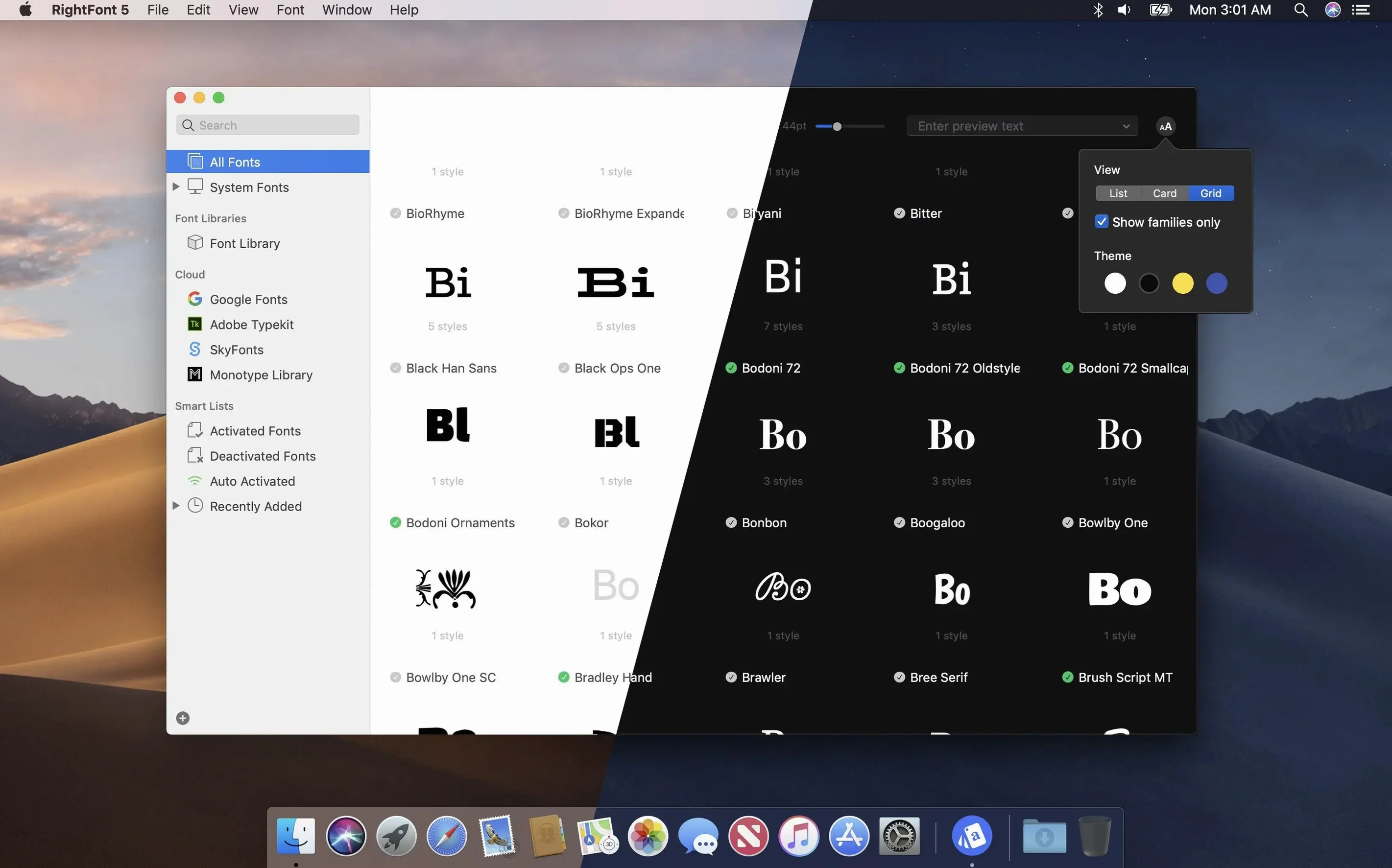
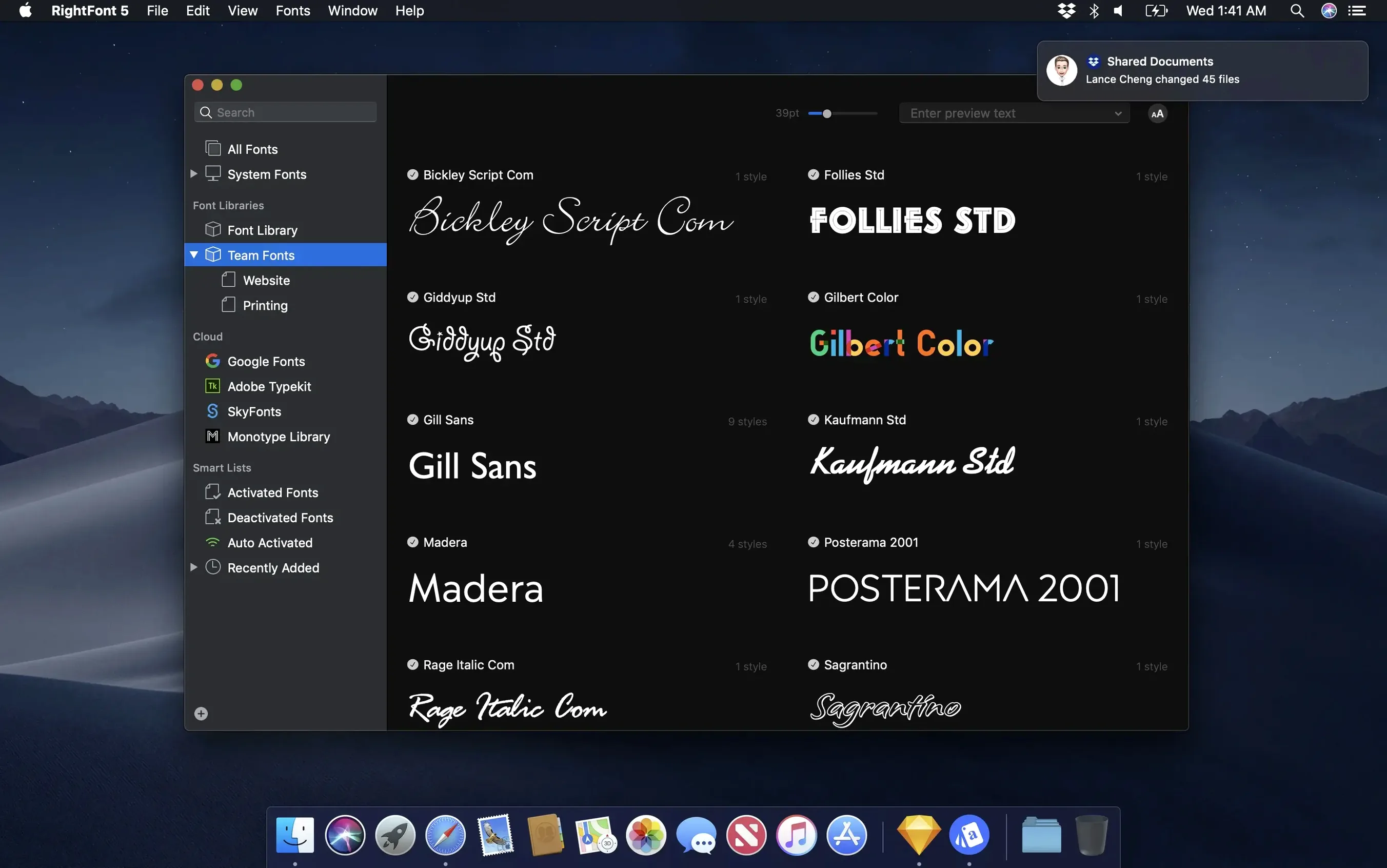
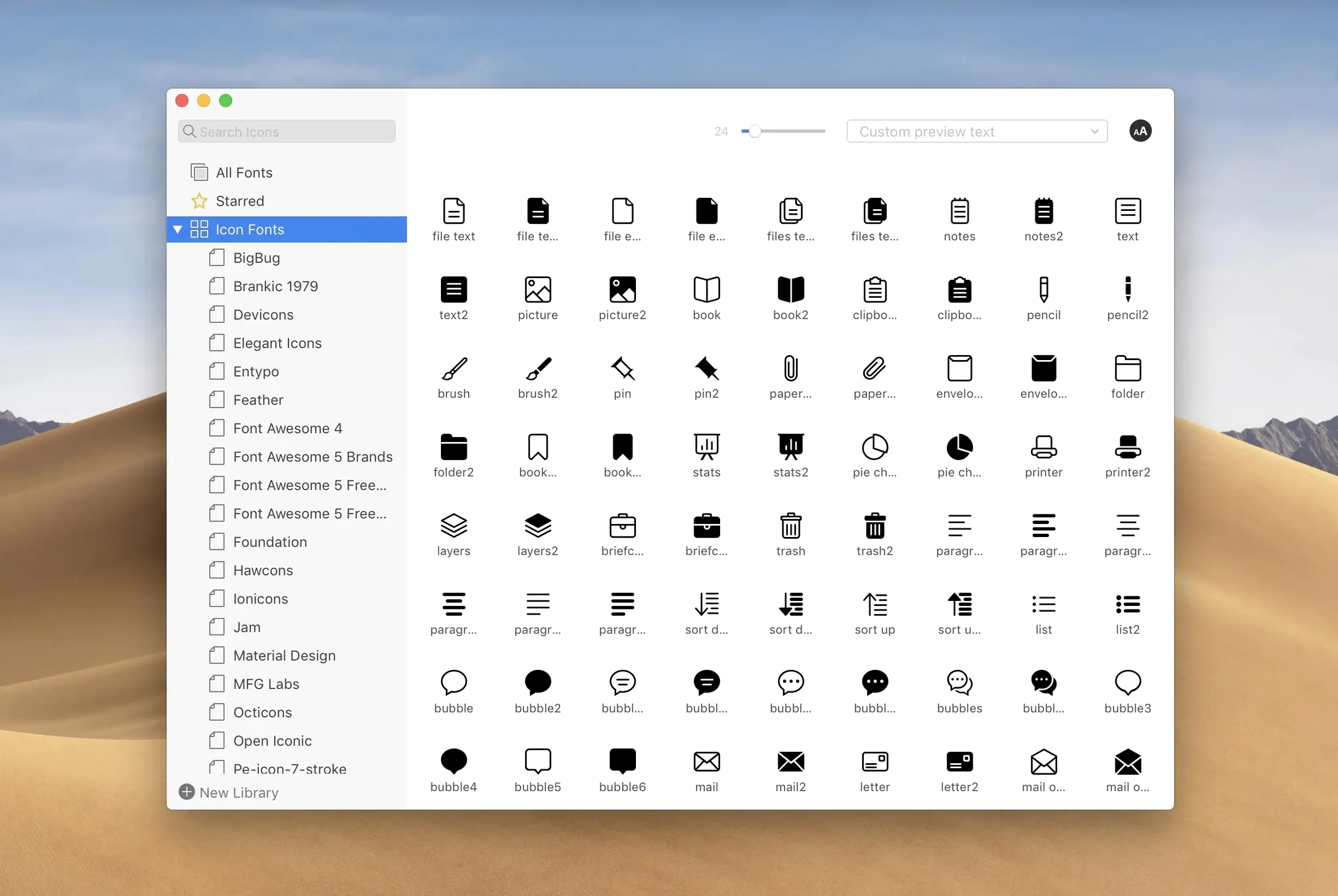
Version 10.2.1 tidies up tag management and makes font imports more reliable — the kind of housekeeping that matters when you have thousands of fonts to wrangle. RightFont needs macOS 11 or newer and runs on both Intel and Apple Silicon Macs.
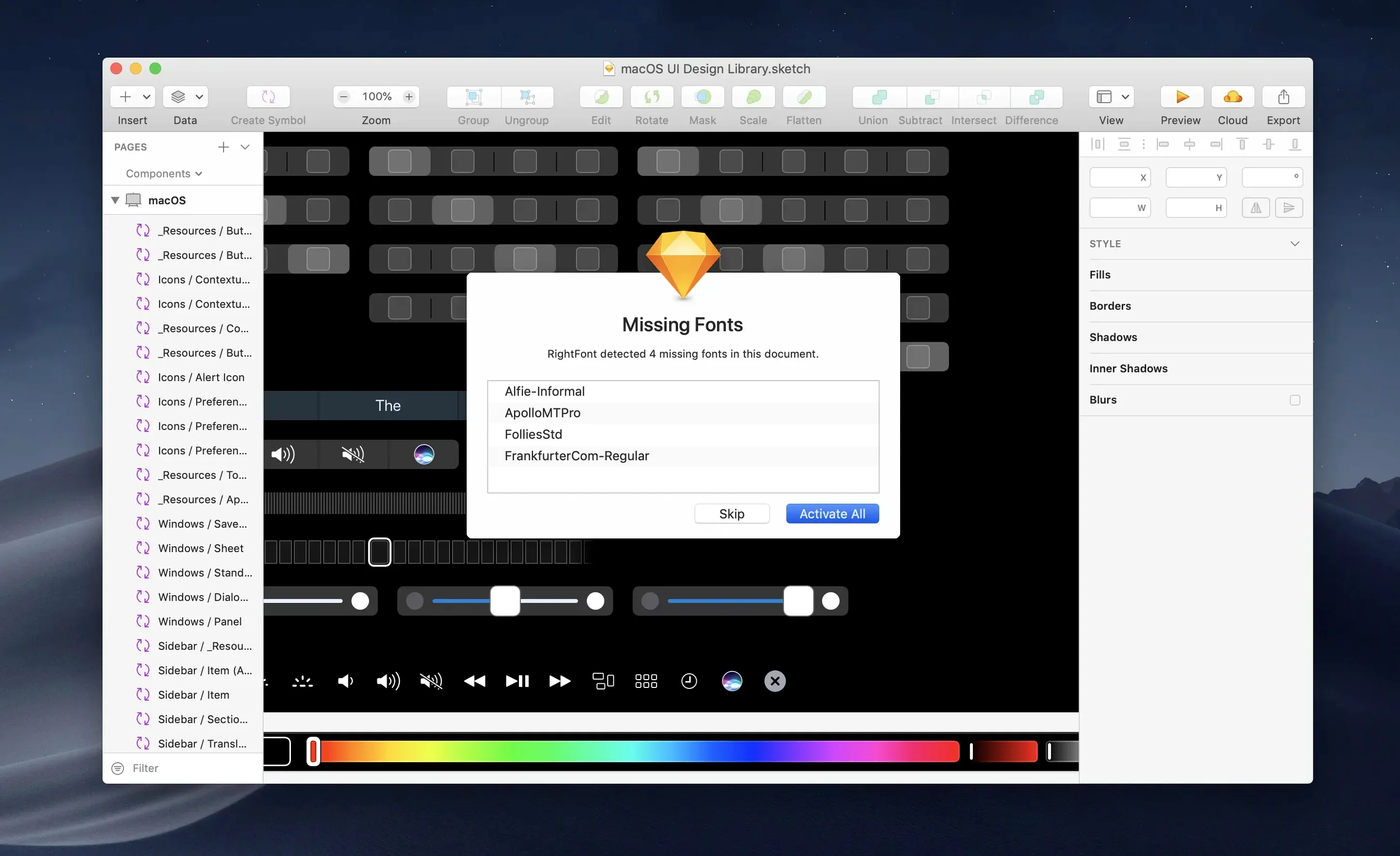
People often ask about the design-software link. RightFont talks directly to Adobe Creative Cloud apps, Sketch and a few others. Double-click a font in its library and it changes the selected text layer instantly. No digging through system folders, no restarting the app.
Another common question is about the menu bar helper. It sits up top and lets you activate or deactivate fonts without opening the main window. Useful when you are mid-project and just need to try a different weight.
The library itself acts as a single place to browse, group and back up your collection. You can move font sets between machines or stash them for safe keeping. It is Mac-only — no Windows version — and built purely for that environment.
Quick poster mock-up, start to finish
Here is a real workflow I use when a volunteer needs a poster for the next repair café. The brief says "friendly, hand-drawn feel, nothing corporate." I already have three candidate fonts in mind but I want to see them against the actual words.
- Open RightFont from the menu bar — no need to launch the full window yet.
- In the menu bar helper, type
handinto the search. RightFont filters as you type, so by the third letter I am looking at handwritten, brush, and marker styles. - Spot a likely font. Click it once to activate it. Fonts with a grey dot are inactive; a black dot means it is ready to use.
- Open the main window (click the icon in the Dock if you prefer). Drag the three shortlisted fonts into a new font list called Café posters. Right-click the sidebar to create the list first.
- Now fire up Affinity Designer. Type the poster headline, select the text layer, then switch back to RightFont. Double-click the first shortlisted font. The text layer updates immediately. Try all three in quick succession — no restart, no export, just instant preview in context.
- Settle on the one that says "community" rather than "greeting card." Deactivate the other two to keep the system font menu lean.
- With the list saved, next month's volunteer can pull up the same shortlist without hunting.
The whole thing takes under three minutes. The real win is not breaking your design flow by opening a separate preview tool or trawling through system font book tabs.
Fonts vanishing after deactivating in Creative Cloud apps
Font activates but won't show in Adobe apps
Adobe sometimes clings to its own font cache. After activating in RightFont, switch to Illustrator or InDesign and force a font list refresh — usually Type > Find Font or simply restarting the Adobe app does it. The version 10.2.1 update squashed several Illustrator-specific bugs, so if you are on an older rightfont 9.7 build, upgrading smooths this out noticeably.
Tags disappearing after import
Earlier versions could lose tags when you imported a batch with mixed file types. The 10.2.1 tag-management improvements fix that, and you can now drag subtags back into the main Tags section if they land in the wrong spot. If a tag still vanishes, right-click a font and choose Reveal in Finder to check the original file — sometimes the metadata was missing from the source.
Menu bar helper feels sluggish with large libraries
If you are pushing 5,000 fonts, the menu bar search can pause for a beat. Keep your active set small — deactivate fonts you rarely use rather than removing them entirely. RightFont handles large libraries better than most, but the helper is designed for speed, not for browsing the whole collection. Save deep browsing for the main window.
How RightFont sits alongside similar Mac apps
Three tools tend to come up when people search rightfont macos alternatives: Typeface, FontBase, and the built-in Font Book. They each have a different headspace.
Typeface leans hard into visual comparison. Its grid-preview and quick-pairing features are lovely if you spend your day matching body text to display faces. It lacks the direct Adobe plugin link that RightFont offers, so you are doing more manual activation and switching. Designers who live inside Illustrator or Photoshop often end up back at a rightfont download because that double-click text-layer swap becomes muscle memory.
FontBase is cross-platform and free for the core features. That matters if you move between Mac and Windows. Its activation feels a touch heavier than RightFont's — you notice a small delay when toggling fonts on and off. Tag management in FontBase is solid, but the 10.2.1 improvements in RightFont (subtag dragging, cleaner import feedback) make organising large collections on a Mac feel more natural.
Font Book is already on your Mac and costs nothing extra. It is fine for activating a handful of downloaded fonts, but it gets unwieldy past a hundred, and its preview tools feel stuck in the past. RightFont replaces it entirely for anyone who regularly installs, compares, or backs up font sets. The library approach — moveable, shareable lists you can copy between machines — solves a problem Font Book never really acknowledged.
For a purely Mac workflow where speed and direct design-app integration matter, RightFont hits the sweet spot. The others fill gaps (cross-platform, visual comparison) but none match that instant layer-switching behaviour when you are mid-layout and just want to try twelve different headline fonts without taking your hands off the keyboard.
- More reliable font imports, with a finalization stage and a count of unsupported files shown clearly
- Better tag management — subtags can now be dragged back to the main Tags section
- Fixes for Adobe Illustrator, QuarkXPress and macOS 27
- macOS 11 or newer
- Works on Intel and Apple Silicon Macs
Questions from the bench
Does RightFont work with Adobe Creative Cloud?
Yes. It gives you direct access to fonts inside Adobe apps, Sketch and similar design tools, and lets you change a text layer font by double-clicking in the RightFont library.







 Back up
Bench talk (0)
Sign in or get a library card to pin up a note.
Nobody has chimed in on this card. If you have used it on an old Mac, say which one.