
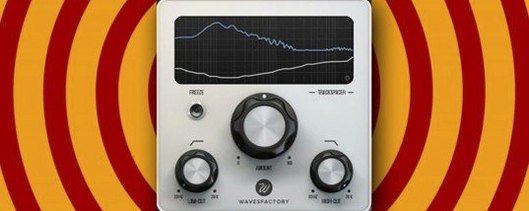
Wavesfactory Trackspacer 2.5.10 — Mac version
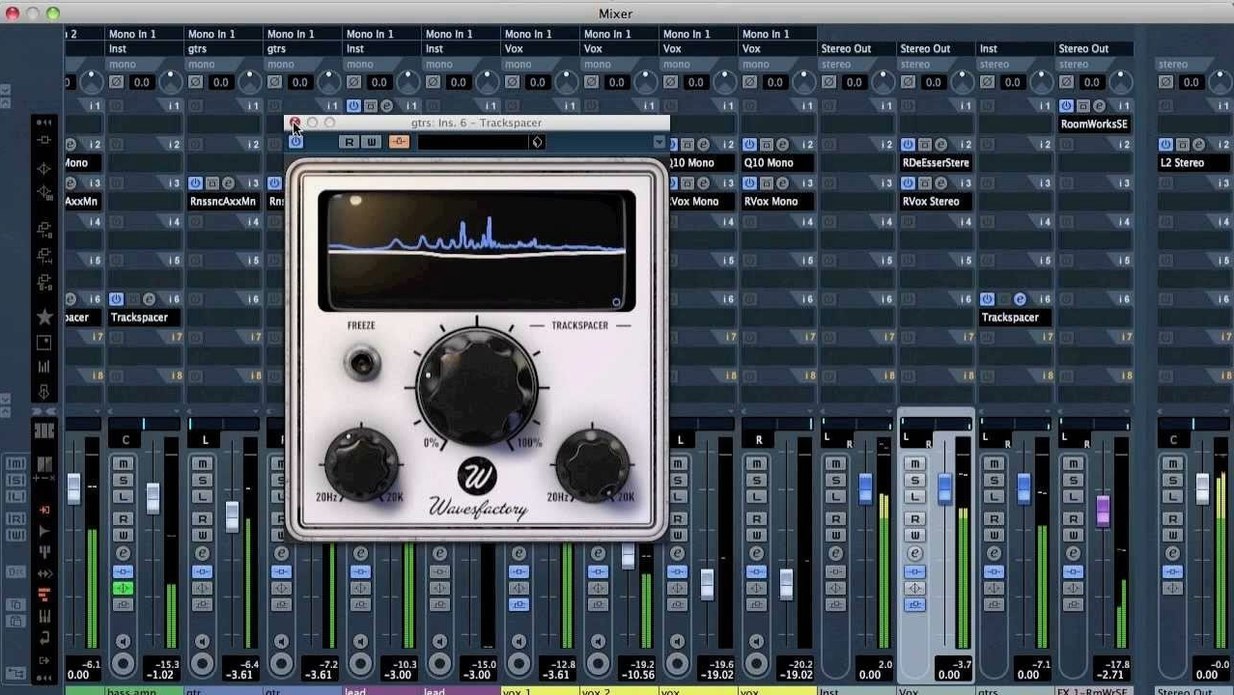
When a vocal and a synth pad fight for the same mid-range, pulling the fader down just makes the pad quieter—not clearer.
Sidechain input — the track you want to hear (like a lead vocal).
Insert point — the track you want to tuck out of the way (like a rhythm guitar or pad).
Reversed EQ curve — Trackspacer analyses the sidechain and cuts only the clashing frequencies on the insert track, leaving everything else alone.
Real-time action — the ducking follows the sidechain as it plays, so the effect moves with the music.
Drop it on a bass bus and feed it the kick drum channel. The bass dips around the kick’s fundamental without losing weight on the higher notes. Works just as neatly on a busy drum bus to let a snare pop through. Because it uses 32 bands of multiband ducking instead of broadband compression, the result sounds more like a tidy arrangement than a processing trick.
Routing a dry single-instrument sidechain feed
The big one is feeding it the wrong sidechain source. People route a stereo mix bus where the kick and bass are already summed together, then wonder why the ducking sounds vague. Give Trackspacer a clean, single-instrument feed—the drier the better—and the cut stays tight.
Another common slip is leaving the Attack and Release at factory defaults for every situation. On a spiky snare you might want a fast attack and a quick release; on a sustained synth pad you'll probably want both slower so the carving breathes naturally. If you hear a pumping, clicky artefact, shorten the release first.
And plenty of folks crank the Amount knob to 100% right away. Most of the time 30–50% is enough to open up space without making the insert track sound hollow. Use your ears, not your eyes—if the pad suddenly sounds like it's playing from the next room, pull the amount back.
Carving space for dense midrange arrangements
Mix engineers working with dense arrangements hit the sweet spot straight away. When you've got stacked backing vocals, doubled guitars and a piano all competing around 1–4 kHz, Trackspacer does the negotiation for you. It's less about fixing a broken mix and more about keeping a busy one intelligible.
Electronic producers running kick and bass sidechain setups find it a more surgical alternative to a compressor. Instead of dipping the whole bassline in time with the kick, you only duck the low-end thump—the bass melody keeps its presence higher up.
Podcast and dialogue editors also latch onto it. Feeding a music bed into the insert slot with the voice track as the sidechain gives you automatic, frequency-dependent ducking that sounds far more natural than a broadband ducker. The music stays present; it just politely makes room around the voice.
Real-time 32-band analysis with near-zero CPU hit
The analysis happens in real time and the 32-band EQ reacts without perceptible lag—on an M1 Mac it barely registers in a moderate session. On older Intel machines from the macOS 10.9 era it still runs comfortably, though stacking twelve instances might start nudging the CPU meter. The plugin reports latency of 512 samples, so it is not a zero-latency effect; during tracking you may prefer to keep it bypassed and engage it during mixing.
Stability has been uneventful in the good way. No sudden silence, no GUI freezes when switching sidechain sources in Logic or Ableton Live. The interface stays responsive even when you ride the Amount knob during playback, which is handy for automating a little extra space during a chorus.
Memory footprint is modest—around 50 MB per instance. You won't feel it on anything made in the last ten years. If you're nursing an older machine through a big mix, freeze a few tracks before piling on more Trackspacer inserts and you'll coast through just fine.
- macOS 10.9 or newer
- Intel 64-bit or Apple Silicon Mac
- 64-bit host supporting VST, VST3, AU or AAX





 Back up
Bench talk (0)
Sign in or get a library card to pin up a note.
Nobody has chimed in on this card. If you have used it on an old Mac, say which one.