
Presentify 8.1.3 — Mac version
1. Pick a tool and draw over anything
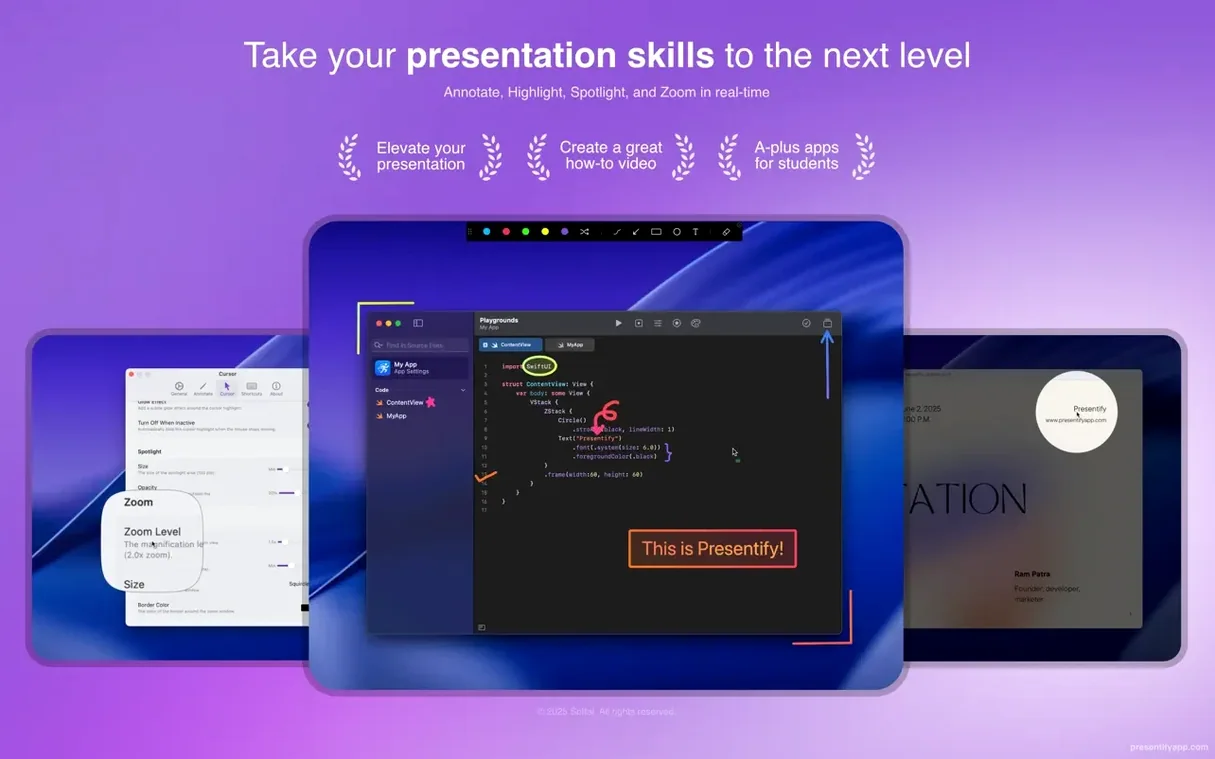
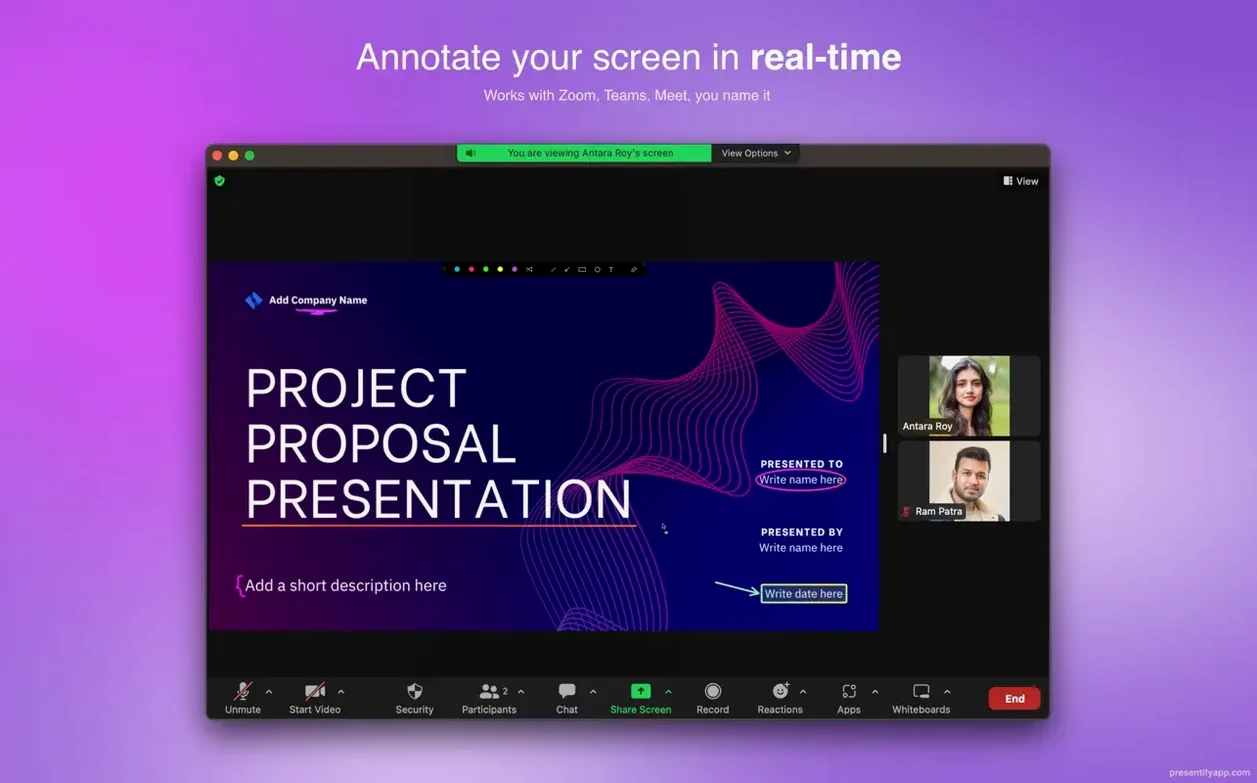
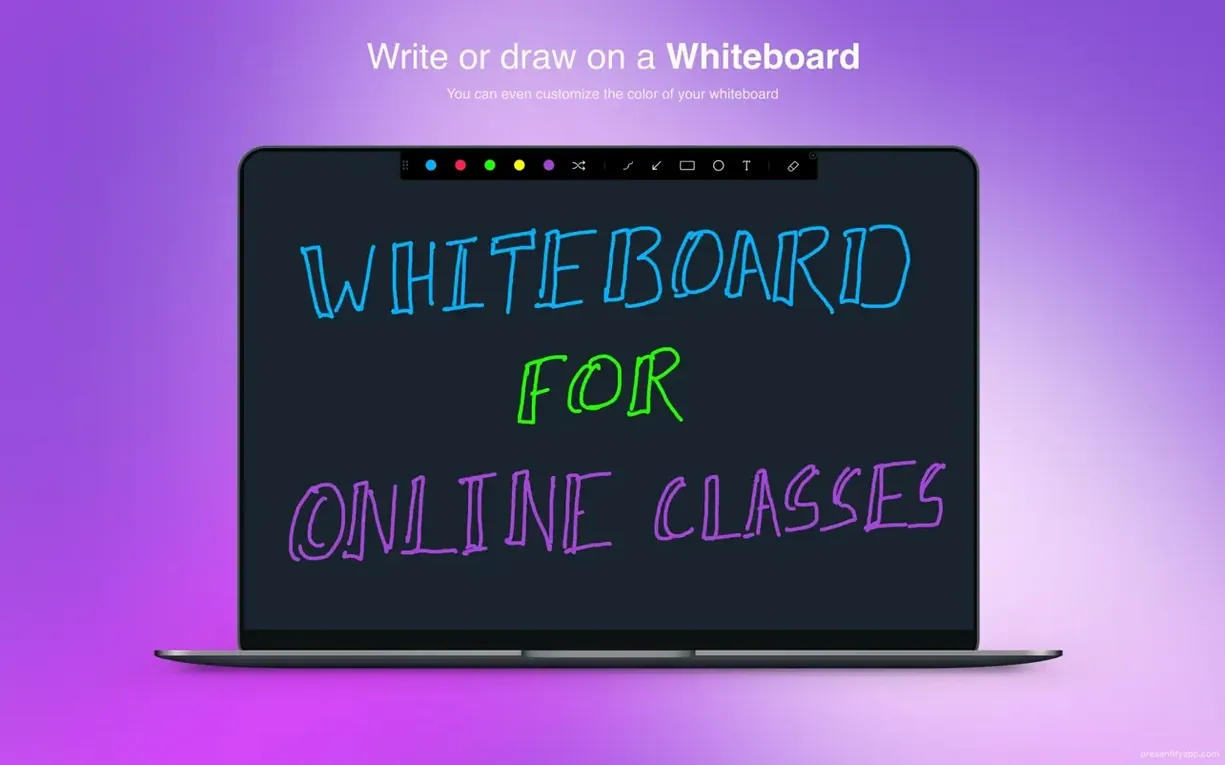
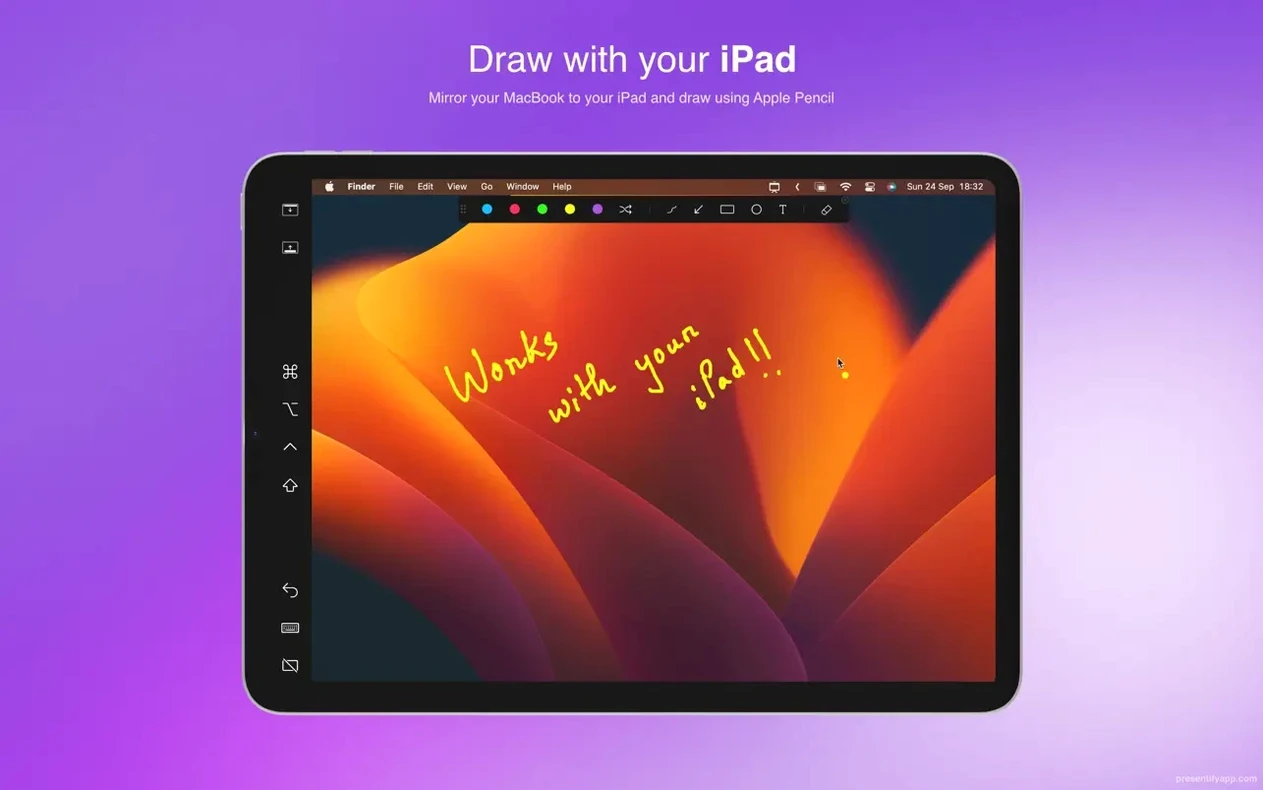
Click the menu bar icon and choose from rectangles, circles, arrows, freehand lines or text. Scribble a note, box a button, point out a detail. The annotations sit as a transparent layer on top of whatever you are showing — browser, code editor, Keynote slides, full-screen video. No switching apps. When you are done, tap a key to wipe the board clean.
2. Pull focus with a spotlight
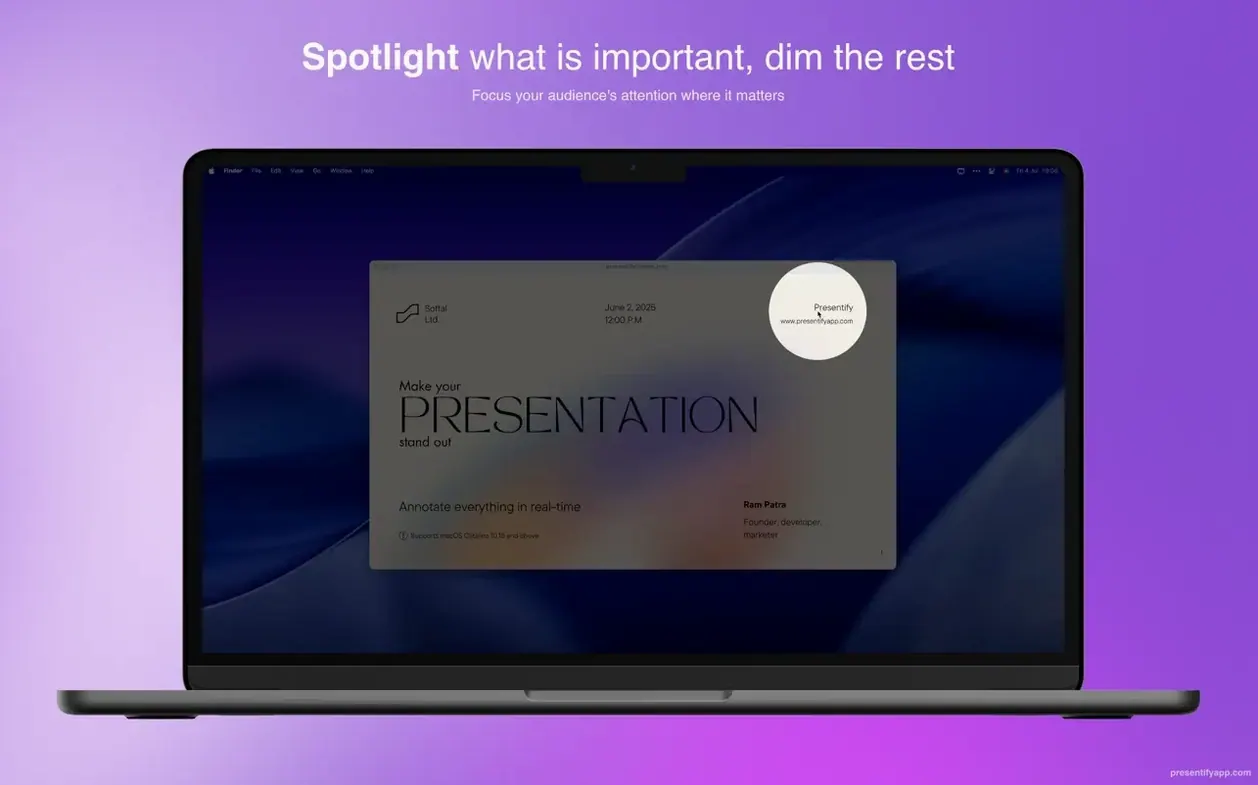
Hit the spotlight mode and the screen dims around your cursor. The eye goes straight to the one thing you are talking about. Dial the size up or down to match a menu item, an icon or a paragraph.
3. Highlight the pointer and zoom in
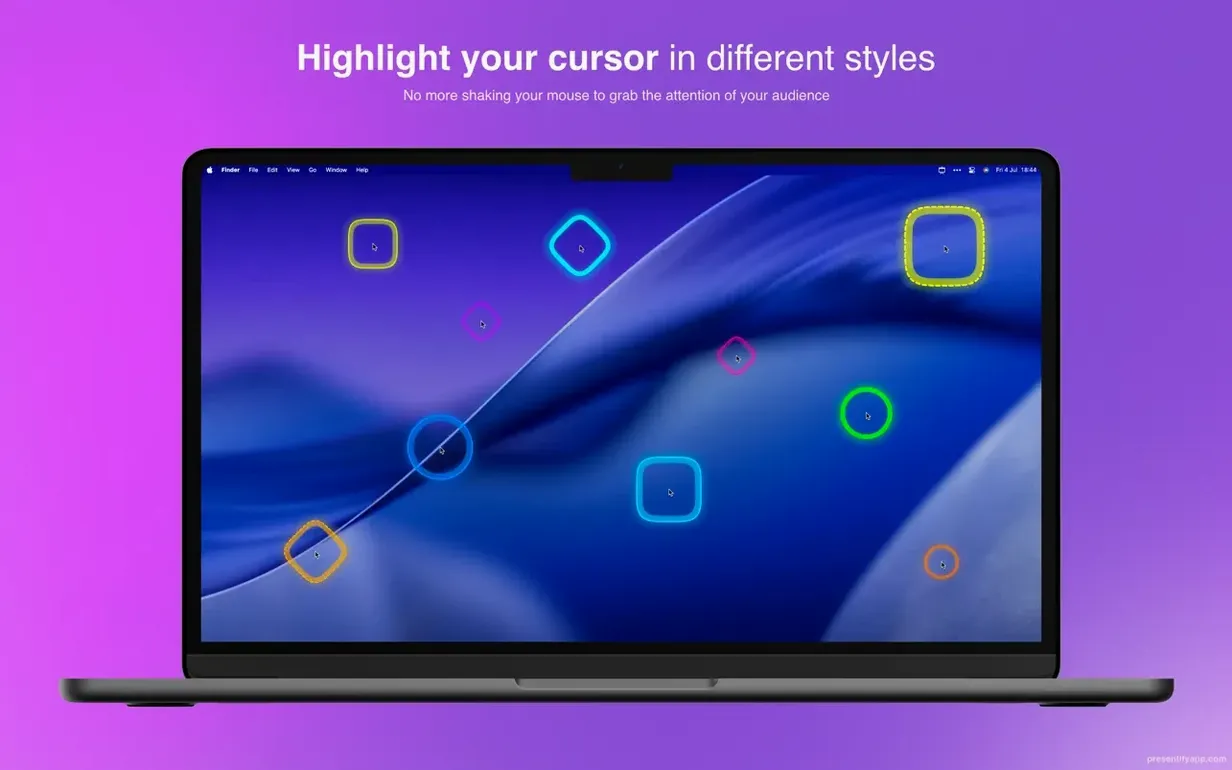
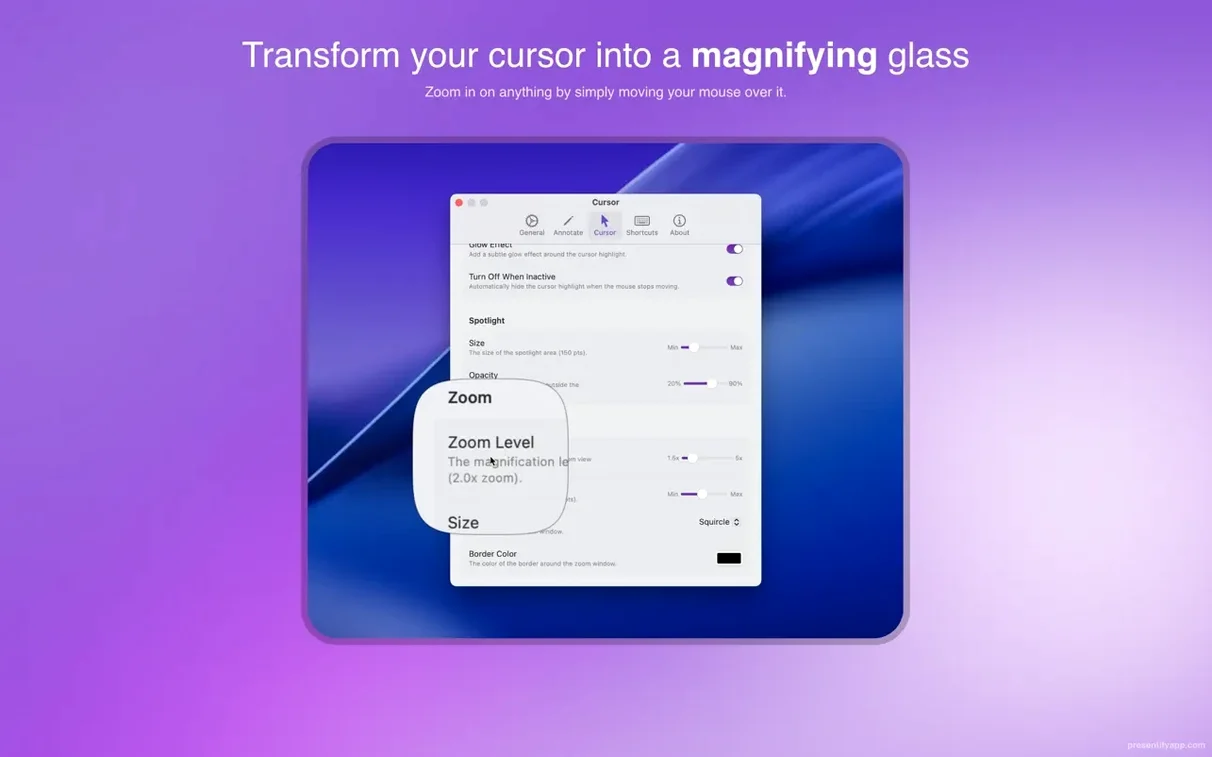
Turn on cursor highlight and a coloured ring follows every mouse move so nobody loses track of where you clicked. For tiny UI or small text, pinch to zoom and the area under the cursor swells up. Works a treat on video calls — Zoom, Google Meet and Skype all see the same magnified view.
The whole thing is one thin menu bar app. It does not care whether you use a trackpad or a Wacom tablet, and it speaks English, German, Spanish, French and Russian. If you teach, record tutorials or run a lot of walkthroughs, it earns its place in the menu bar.
Tick "Launch at login" before your first call
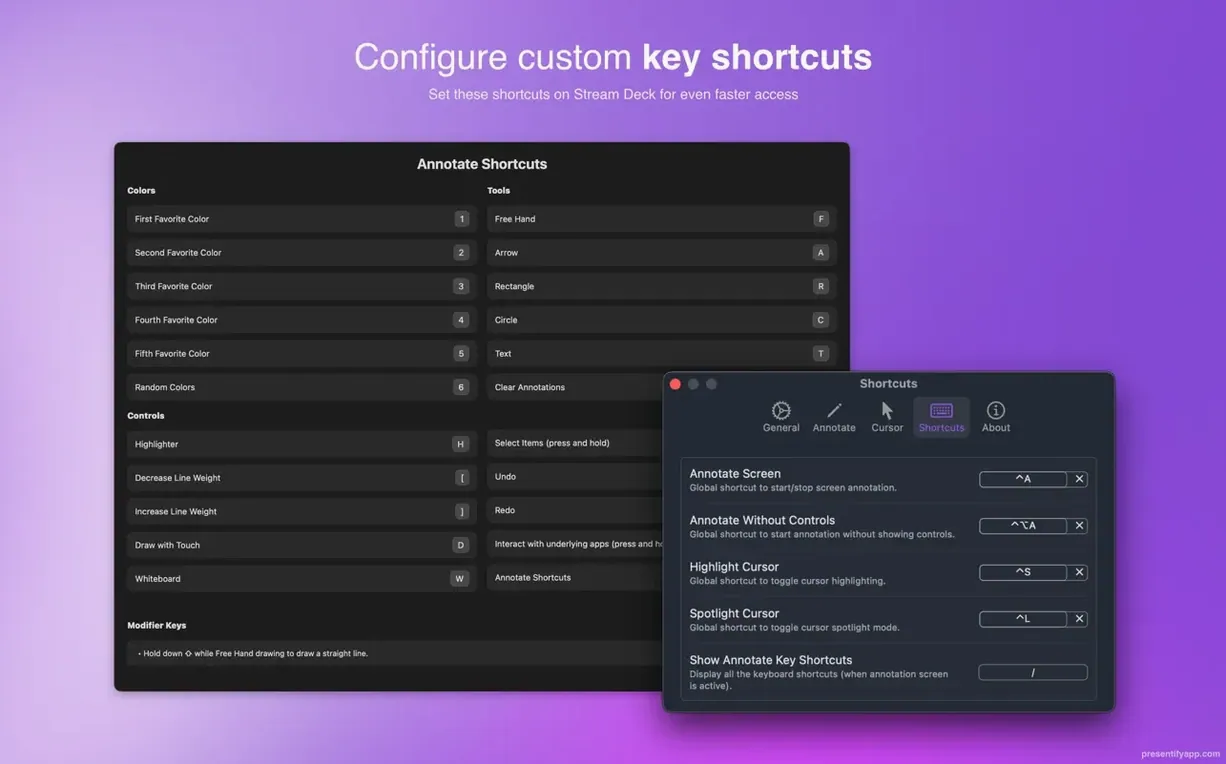
Open the preferences pane from the menu bar icon (the little gear) and do three things straight away. First, tick Launch at login — you want it ready, not something you remember to open mid-call. Second, under the General tab, switch Auto-erase annotations to something like 3 seconds. Draw, talk, and the ink fades without you touching a key. Third, give the Toggle drawing action a keyboard shortcut that makes sense to you. I use ⌃⌥⌘D because it is easy to hit blind and never clashes with another app.
If you use a graphics tablet, head to the Drawing tab and turn on Pressure sensitivity. The line weight will follow how hard you press — handy for marking up diagrams with a Wacom or XP-Pen without looking like a felt-tip blunderbuss. While you are there, switch the colour source to Random gradient for a bit of visual variety. Every stroke picks a fresh gradient, so consecutive arrows and circles stay easy to tell apart.
The annotation rewrite that stopped the hitching on Apple Silicon
The jump to version 8 brought a rewrite that made the annotation layer genuinely smooth on Apple Silicon Macs — earlier releases could hitch when drawing over a busy screen. More useful day-to-day: the Fn-hold trick got baked in properly. Keep annotating mode on, hold the Fn key, and you can click through to the app underneath without turning drawing off. You can type into a text field, drag a slider, or switch browser tabs, then release Fn and carry on scribbling.
Text annotation also landed in the 8.x cycle. You pick the T tool, click anywhere, type a quick note, and hit Return. The text sits on the same transparent overlay, so it stays legible when you move the window behind it. A small thing, but one that saves you from explaining “top-left corner” when you can just type “click here” next to a button.
Option-click the menu bar icon to toggle without a menu flash
The menu bar icon doubles as a quick toggle. A single click shows the tool palette; Option-click switches drawing on and off without opening anything. If you record screencasts, that means one less menu flash in the capture. Speaking of recording: when auto-erase is off, the Clear all action (give it a key, too) wipes every annotation at once. No hunting for stray arrows left on the slide before the next take.
Cursor highlight is more than the ring. In the Highlight tab you can set it to fill the pointer with a solid colour instead — easier to track on dark IDEs or low-contrast backgrounds. And the spotlight dim level is adjustable down to nearly opaque. If you present light-mode slides, push the dim to about 60% so the darkened area stays visible enough for context but still pushes focus to the lit spot.
One last thing: the app works in full-screen mode without any extra setup. Fire up a Keynote presentation, swipe into full-screen, and the tools stay right there. Same for full-screen video. It is the kind of thing you expect to break, and it just does not.
- macOS 13 Ventura or later
- Works on Intel and Apple Silicon Macs
Questions from the bench
Does Presentify work when I share my screen in a call?
Yes. It is compatible with Zoom, Google Meet and Skype, so any annotations you draw show up for everyone watching your shared screen.
Can I use Presentify with a drawing tablet?
Absolutely. It works with graphics tablets from XP-Pen and Wacom, which makes freehand drawing and handwriting feel a lot more natural.

 Back up
Bench talk (0)
Sign in or get a library card to pin up a note.
Nobody has chimed in on this card. If you have used it on an old Mac, say which one.