

QLab 5.6.3 — Mac version
Running a show with a stack of separate apps and hardware is a headache. You end up nudging faders, clicking timelines and hoping nothing drifts out of sync. QLab brings sound, video, lighting and MIDI triggers into a single cue-based workspace, so one operator can keep the whole picture together.
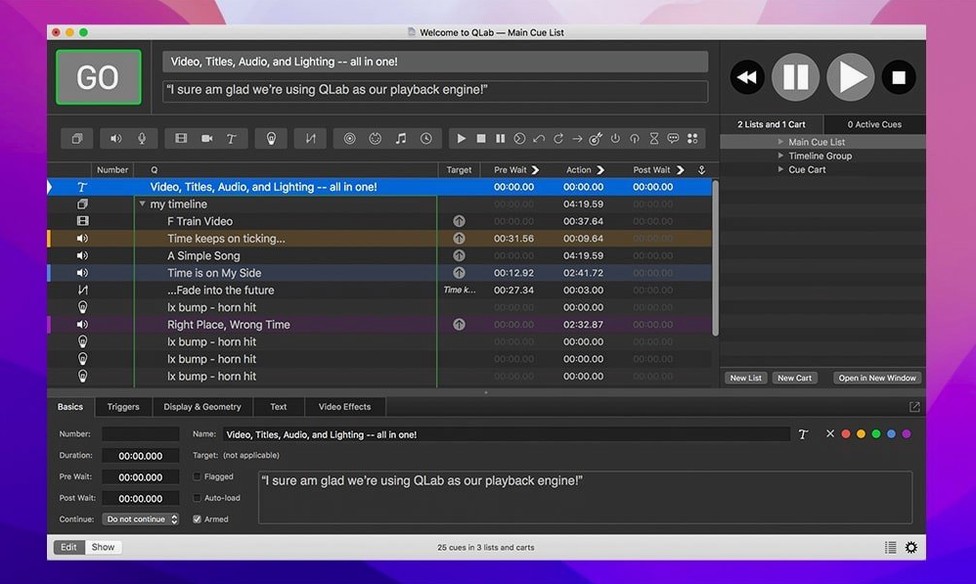
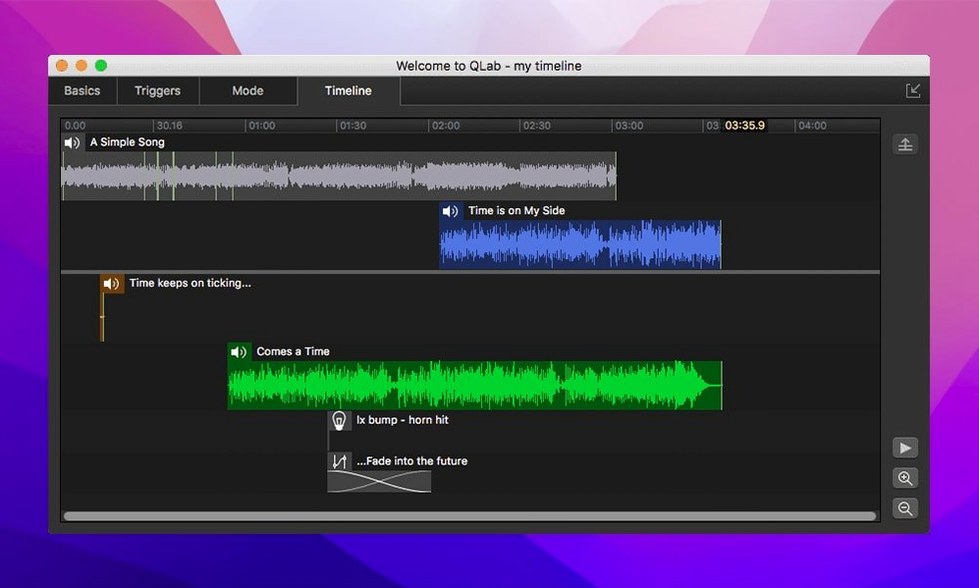
One timeline for audio, video, and lighting cues
- Chaining audio, video and lighting cues in one timeline
- Live video input from webcams or Blackmagic capture devices
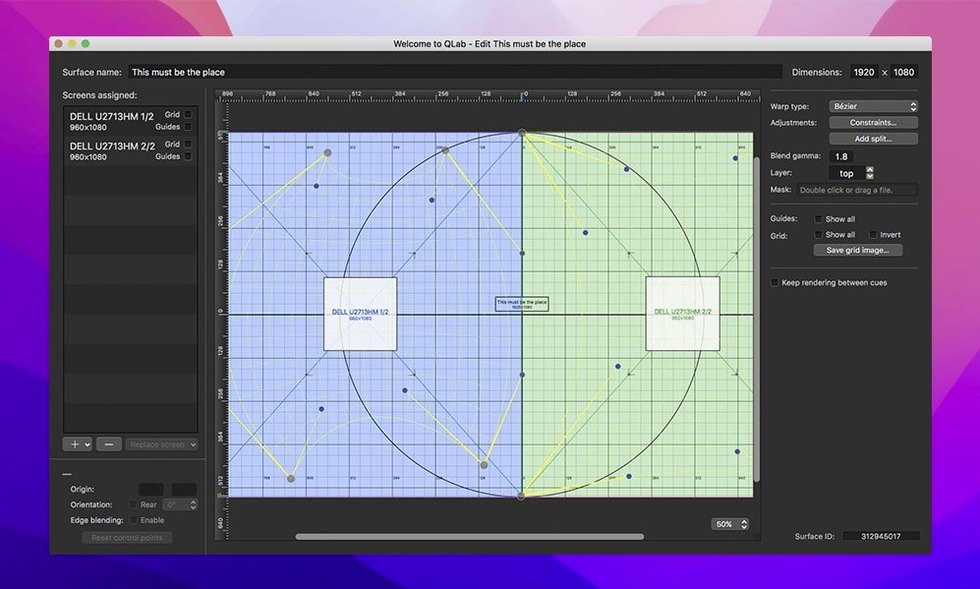
- Correcting projector alignment with corner pinning and keystone
- Sending MIDI or OSC commands to outboard gear and other apps
- Overlaying titles and lower-thirds on video
- Working across 48 audio outputs and 24 inputs
- Sending video to other software via Syphon
- Undoing changes without rebuilding cues from scratch
Light Library flags misconfigured instruments
- Designed for macOS 11 and later, Intel and Apple Silicon
- Helpful row colouring now flags misconfigured instrument definitions in the Light Library
- A rare crash when stopping video playback has been fixed in the latest build
What's new enough to notice
QLab 5.6.3 isn't a headline-grabbing update, but it squashes a couple of things that could trip you up during a tech week. The big one for lighting folks is the new row colouring in the Light Library and Light Definition editor. If an instrument definition is misconfigured, the row turns a different colour — no more squinting at tiny text fields to spot the problem. In the Light Patch editor, a broken definition now actually says Broken. Straightforward. You see it, you fix it, you move on.
There's also a migration tweak. Workspaces built in 5.6.2 or earlier that talk to Right On Cue Services Stage|Tracks now quietly switch over to the built-in network device definition. No manual hunting through preferences. And a rare crash that could happen when stopping video playback has been ironed out — the sort of thing that only bites once in a blue moon, but when it does, it's ten minutes before curtain.
A session with QLab, step by step
You open a workspace from last week's rehearsals. The cue list stretches down the left side of the screen, each row numbered and colour-coded by type. Audio cues are green. Video cues are blue. MIDI cues sit in purple. You need to tweak a sound effect that lands half a beat late.
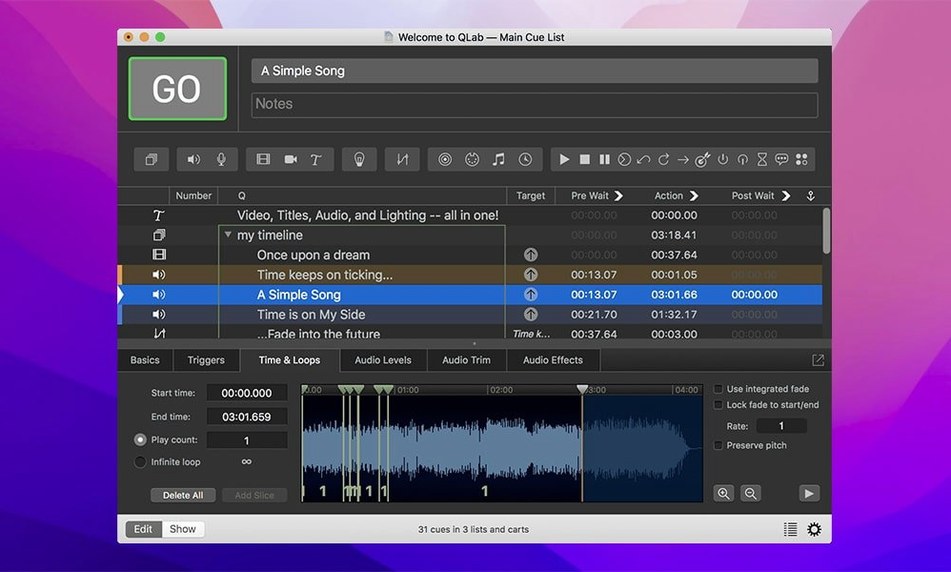
You double-click the audio cue. The integrated editor opens inline — no bouncing out to another app. The waveform appears. You drag the start marker a few frames to the right, trimming dead air, then tap the spacebar to audition it. The edit plays immediately, through the same output routing the show will use. You close the editor and move on.
Next, a video cue on the projector. The image is skewed because someone nudged the rig. You open the video's geometry panel, grab the corner-pin handles, and drag the top-right corner until the test pattern sits square on the screen. Keystone correction handles the rest. You save the workspace and run the sequence from three cues back. Everything fires in order: lights dim, video fades up, the trimmed audio lands exactly where it should.
When things don't quite work
One common snag: the app won't launch after dragging it into Applications. macOS throws up a Gatekeeper warning. Instead of wrestling with System Settings, you mount the disk image, run the Open Gatekeeper friendly script, and press Enter in Terminal when prompted. That's it. Launch QLab normally afterwards.
Another headache people run into is audio routing going silent after a workspace migration. The culprit is usually a mismatch between the old audio device assignment and the current hardware setup. Open Workspace Settings > Audio, check which output patch is assigned, and make sure your interface is plugged in and recognised before you start troubleshooting individual cue levels.
If video cues stutter, look at your cue's playback speed setting. A clip set to half-speed with pitch correction enabled asks more of the machine. Dropping the resolution in the video's Geometry tab or pre-rendering heavy effects often smooths things out. And if you're running live camera input through a Blackmagic device, check that the input format matches what the device is sending — mismatched frame rates cause lag that looks like a crash but isn't.
How a small theatre uses it
A sixty-seat fringe venue runs a two-hander play with twelve lighting states, three video projections, and a handful of sound cues. Their tech operator is also the stage manager. During the show, she triggers everything from a single MacBook Air. A foot pedal advances the cue list so her hands stay free for the lighting desk backup.
Before the run, she programmed the show in a rehearsal room with no projector. She used the built-in Audition Window to preview video on the laptop screen while building cues. Lighting cues were roughed in as dummy MIDI triggers. When the company moved into the venue and patched in the actual dimmers and projector, she swapped the dummy triggers for real DMX via a USB interface and adjusted the corner-pinning on site. The same workspace file travelled from rehearsal room to opening night without a rebuild.
No internet required after setup
Does it need an internet connection to work? No. QLab runs entirely offline once it's installed and set up. A network connection only matters if you're sending OSC or MIDI over a network to other machines, or using Syphon to share video between apps on the same machine. The licence check is local.
Can I run it on an older Mac? The current build needs macOS 11 or newer. Intel and Apple Silicon are both fine. If your machine is stuck on Catalina or earlier, this version won't open — you'd need to look at older builds, and workspaces aren't always backwards-compatible, so plan around that if you're sharing files between machines.
What's the learning curve like for someone coming from a hardware desk? The cue-list model feels familiar if you've ever programmed a lighting desk or a sampler. The vocabulary is different — "cues" instead of "scenes," "workspace" instead of "show file" — but the logic is the same. Start with audio cues. They're the simplest to grasp. Add video and lighting once the flow makes sense. The undo command means you can poke around without fear of breaking anything permanently.
Will it talk to my existing gear? If your gear speaks MIDI, OSC, or accepts audio and video over standard interfaces, almost certainly yes. QLab doesn't lock you into a closed ecosystem. It's the glue between a Blackmagic capture card, a USB MIDI interface, a network lighting node and a projector — all at the same time, all from one cue stack.
- Rows in the Light Library or Light Definition editor change colour when an instrument definition in the row is misconfigured.
- Workspaces from 5.6.2 and earlier now migrate to the built-in network device definition for Right On Cue Services Stage|Tracks.
- macOS 11 or newer
- Intel or Apple Silicon Mac
- Interface language: English
Questions from the bench
Can QLab handle live video coming from a camera or capture card?
Yes. You can bring in live video from external devices, including Blackmagic capture hardware, and treat it as a cue source.




 Back up
Bench talk (0)
Sign in or get a library card to pin up a note.
Nobody has chimed in on this card. If you have used it on an old Mac, say which one.