
MacDroid Pro 2.10.0 — Mac version
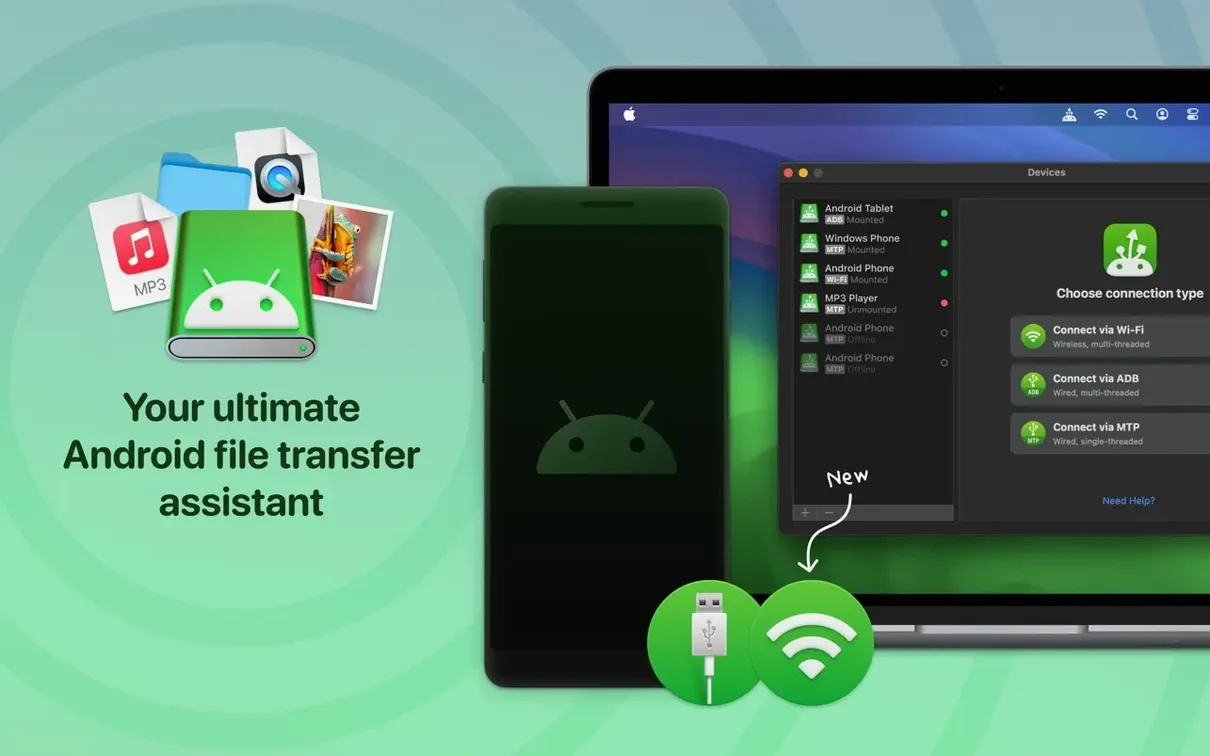
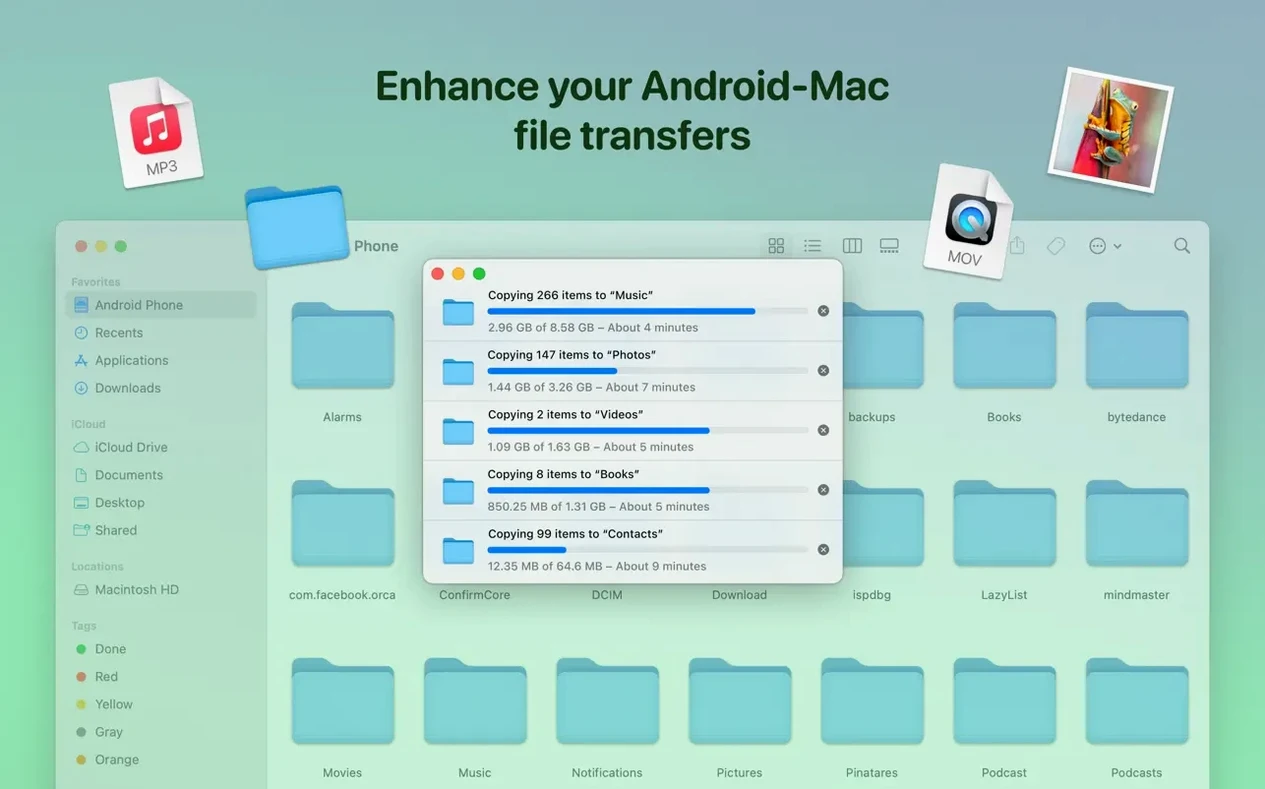
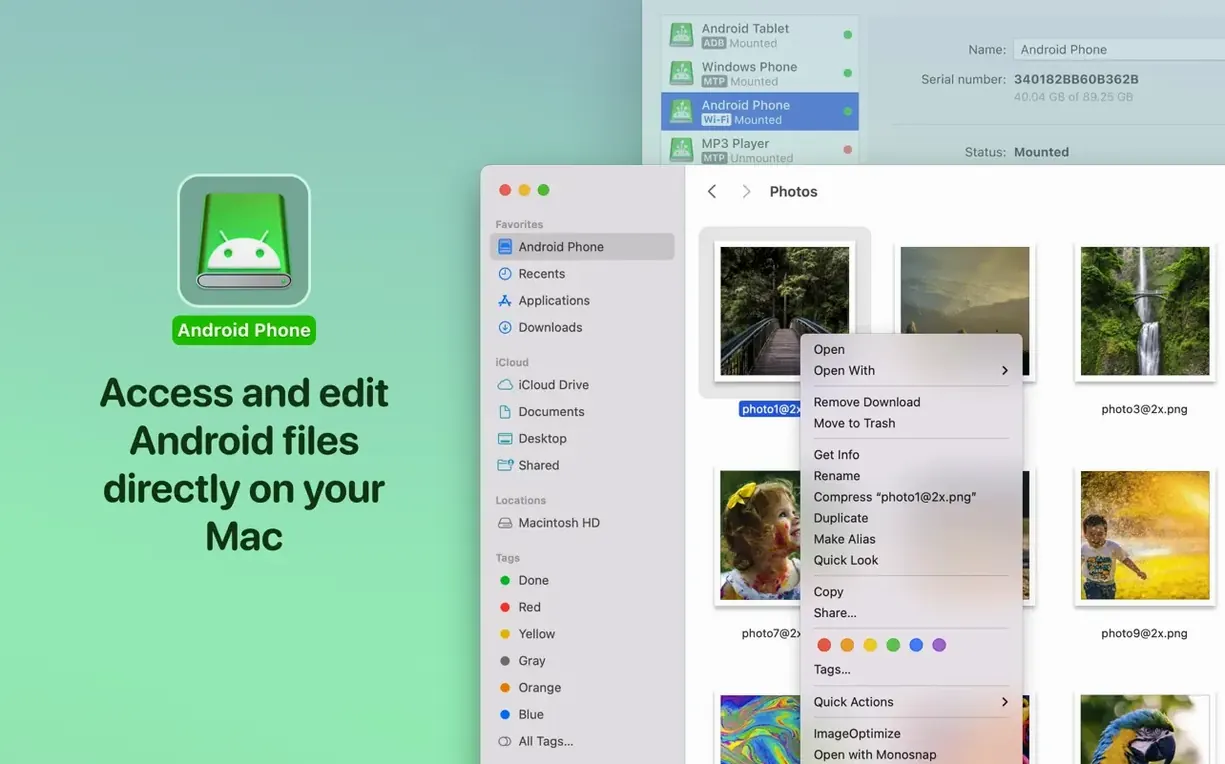
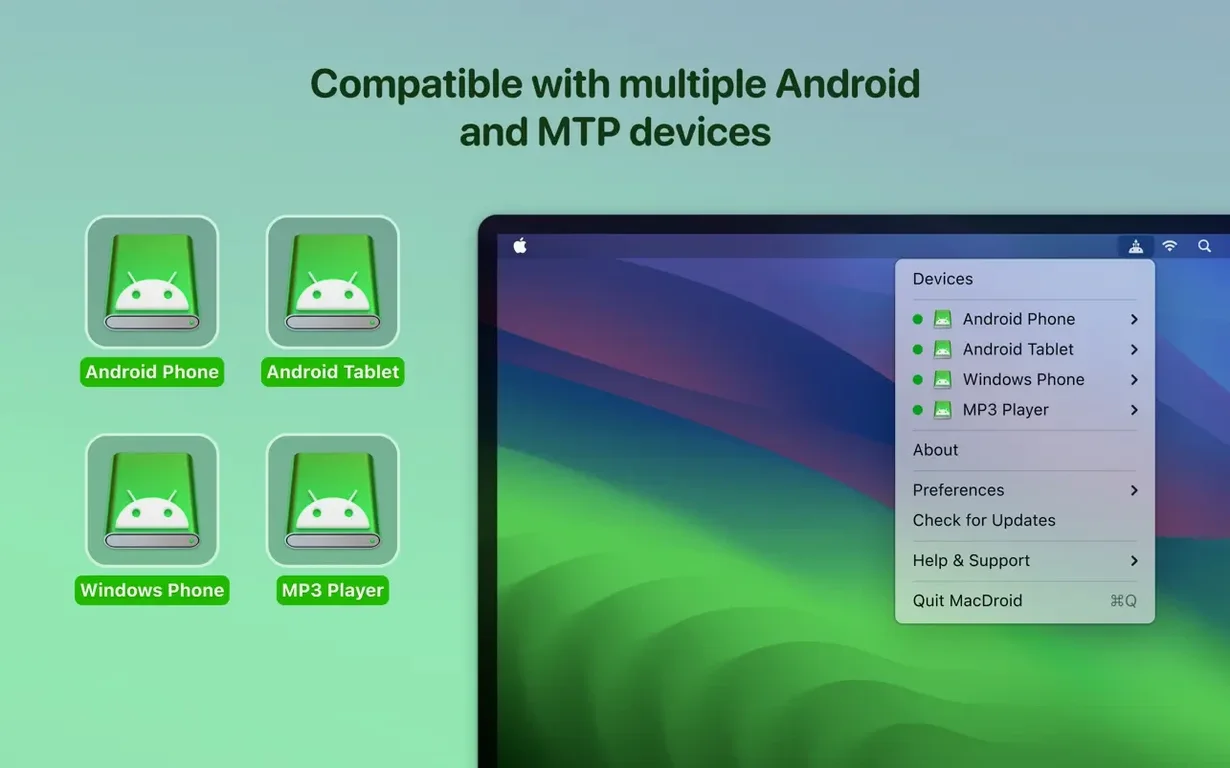
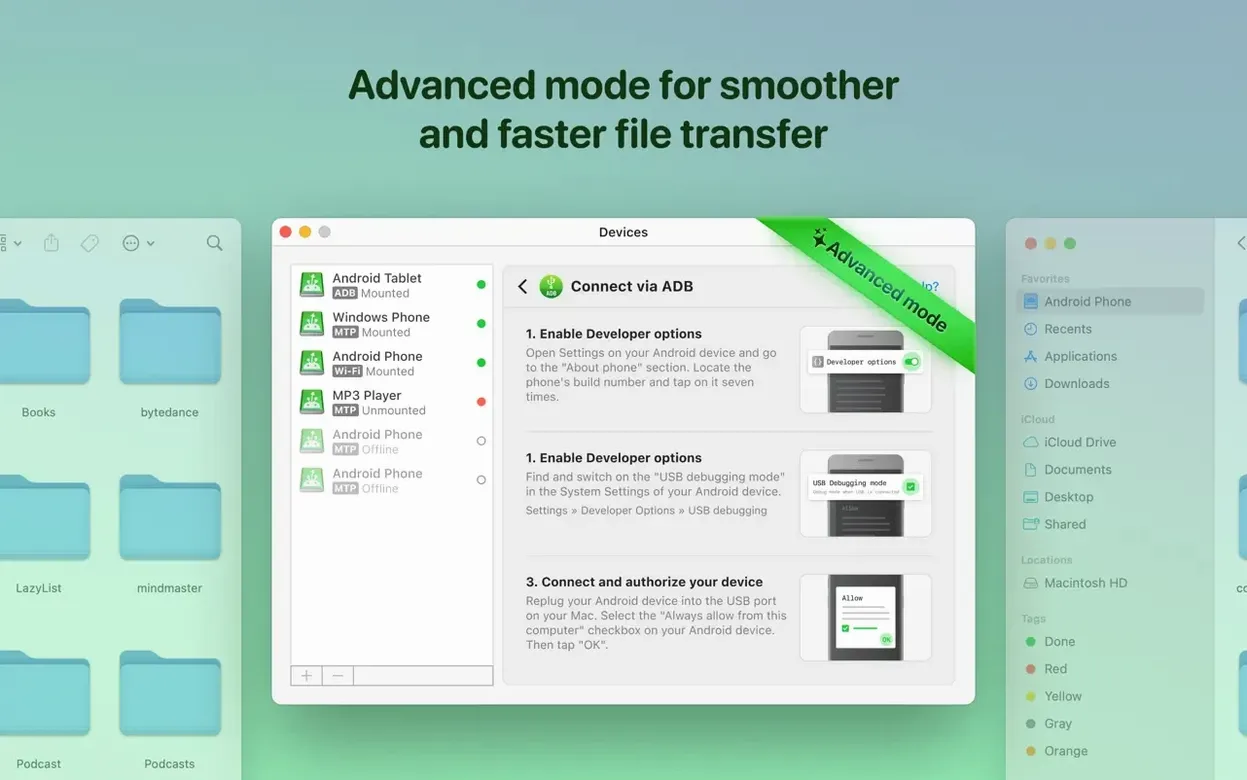
You’ve plugged your Android phone into your Mac, the app’s running, and Finder now shows your handset like any other drive. That’s the core job MacDroid does — mount your Android device so you can drag files around without fuss. If you’ve just installed it, here’s where to start.
- Grab your photos first. Open the mounted device in Finder, head into DCIM, and drag whole folders of shots onto your Mac. It’s the quickest way to clear space on a full phone.
- Try the drive-letter feel. With MTP mode selected, your Android internal and external storage appear as separate volumes. You can copy music straight into a media folder or pull off a presentation you edited on the train.
- Switch to ADB if MTP stumbles. Some Android builds are fussy with MTP. Flip the connection mode to ADB inside MacDroid — it often sorts out slow listings and missing folders.
- Edit files in place. Double-click a document on the mounted phone, work on it in Pages or Photoshop, then save. The changes write straight back to your device.
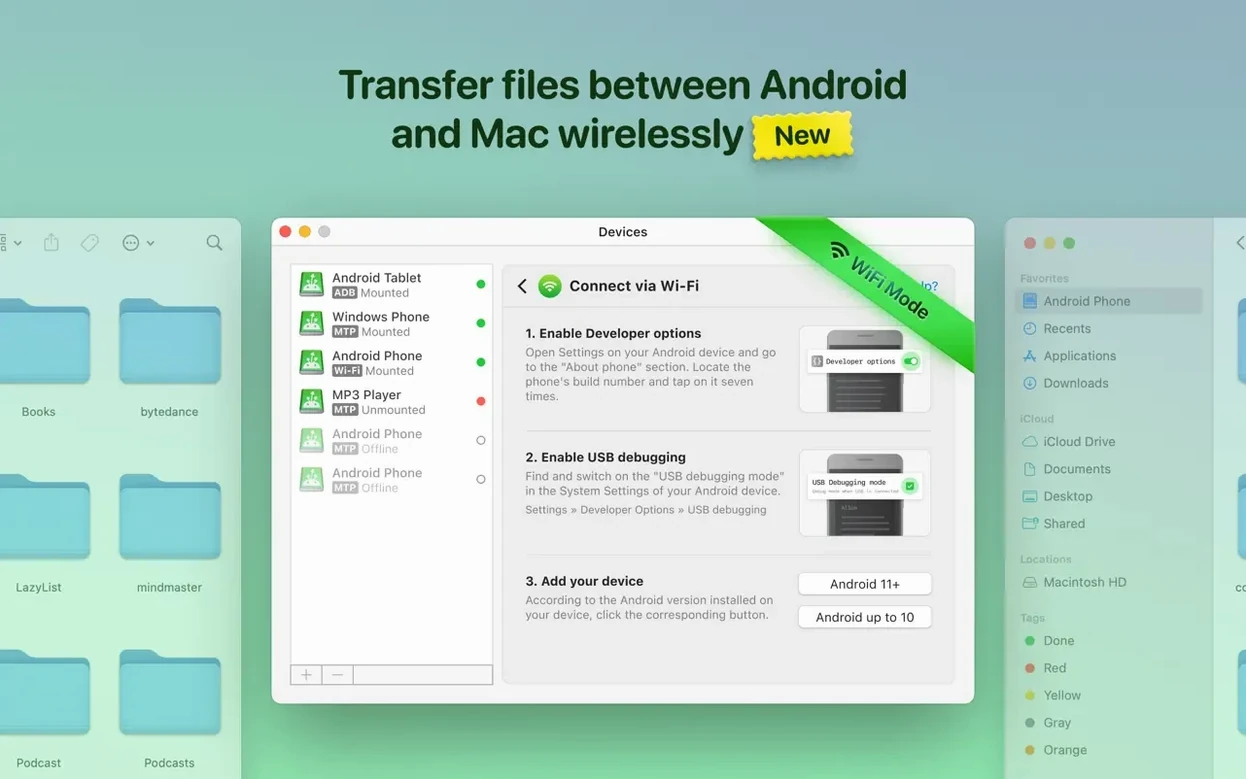
- Use Wi‑Fi mode for a quick single-file grab. When you can’t find your cable, the Wi‑Fi connection lets you pull a PDF or a screenshot across without plugging anything in.
Once you’re comfortable with the wired link, the app lives quietly in your menu bar. Plug in, mount, grab what you need, and get on with your day.
The cable, permission, and mode checks that prevent most problems
Most problems come down to three things: the cable, the permissions, and the mode. Sort those early and you'll skip a lot of head‑scratching.
Using a charge‑only cable. Not every USB‑C lead carries data. If MacDroid sees nothing when you plug in, try a cable you know handles sync — the one from an old external drive usually works. Charge‑only leads are the single biggest reason people think the app is broken.
Leaving Android File Transfer installed. Google's own tool grabs the MTP connection and won't share. If MacDroid can't mount your phone, drag Android File Transfer to the Trash and restart your Mac. The two apps fight for the same resource every time.
Forgetting to unlock the phone and tap "Allow". Android asks permission when a computer wants file access, and that prompt vanishes after a few seconds. If the device stays unmounted, wake the screen, unlock it, and watch for the pop‑up. Tap Allow before it times out.
Sticking to one mode when it misbehaves. Some Xiaomi and Huawei builds show empty folders over MTP. Switching to ADB mode — just a click in the app — often fills those listings right up. Wi‑Fi mode is the fallback when the USB port plays up entirely.
Pulling the cable mid‑transfer. The mounted volume isn't quite like a USB stick. If you yank the lead while a folder is copying, Android's media scanner can leave ghost files. Eject the device from Finder first, or use the Disconnect button in MacDroid's menu bar.
Pin the menu bar icon so mounting feels instant every time
You've got it installed and the phone mounts. Before it becomes background noise, a few habits make everything smoother.
- Pin the MacDroid icon in the menu bar. Hold Command and drag it into a spot you'll see. The icon shows connection status at a glance — green for mounted, grey for idle — and it's faster than digging into the Applications folder every time.
- Set your default mode. Open preferences and pick whichever connection works best with your phone. If ADB gave you a full folder tree on day one, lock it in. The app will stop guessing and just connect.
- Make a "From Phone" folder on your desktop. Drag photos and files there instead of scattering them across Downloads. After a week you'll have a tidy stash of everything you pulled off the device, all in one place.
- Test editing a file in place early. Open a small .txt or .pdf straight from the mounted phone, change something, save, and check the phone to confirm it landed. It's the feature people trust least until they see it work — and it really does work.
- Try a wireless transfer even if you prefer the cable. On a morning when you're rushing, pulling a single document over Wi‑Fi without hunting for a lead will click. The speed isn't the same for bulk jobs, but for one file it's a time‑saver.
- Check the cache location. MacDroid stores temporary files during transfers. If your main drive is tight on space, point the cache to an external volume in the app's settings. The recent update fixed glitches when the cache drive changed, so it's safe to move now.
Once those habits settle in, the app fades into the background. Plug in, mount, do your thing, eject. That's the whole rhythm.
Works on Intel and Apple Silicon Macs running Big Sur or later
A few questions come up again and again in the repair café. Here's the straight version.
"Will this work on my old Mac?" If you're running macOS 11.5 Big Sur or later on an Intel or Apple Silicon machine, yes. That covers a lot of older Macs — anything from 2015ish onwards with a patched or supported install. The app is built for both architectures, so there's no Rosetta‑only awkwardness.
"Do I need to root my phone?" No. MacDroid works with a completely stock Android device. ADB mode needs you to enable USB debugging in Developer Options, which is a settings toggle, not a hack. Plenty of people use ADB for years without touching anything else in that menu.
"Is Wi‑Fi mode actually usable?" For a handful of photos or documents, absolutely. It's not what you'd pick for moving 40GB of video — use the cable for that — but it saves fishing for a lead when you just need a PDF or a screenshot. The setup takes under a minute and the app remembers the pairing.
"Can I finally stop emailing files to myself?" That's exactly the point. Mount the phone, drag the file, done. No uploads, no data allowance burned, no "sent from my phone" signatures. It's the workflow people who find a macdroid torrent or look up macdroid crack are usually chasing — a straightforward bridge between two devices that otherwise pretend each other don't exist.
"Will it mess with my iTunes or Photos library?" No. MacDroid doesn't touch your Mac's media libraries. It shows your Android device as a plain volume. You copy files manually, exactly where you want them. If you've been burned by sync tools before, this is a relief.
"Does it handle external SD cards?" Yes. When the phone mounts, both internal storage and any SD card appear as separate drives in Finder. You can move folders between them through the Mac, or pull everything off the card in one go. It's one of the first things people who grab a macdroid cracked build test, and it holds up fine.
- Traditional Chinese localisation added
- MTP connections and general device operations made more reliable
- File and folder listings now load noticeably faster
- macOS 11.5 or newer
- Works on Intel and Apple Silicon Macs
- An Android device and a USB cable (or a shared Wi‑Fi network)





 Back up
Bench talk (0)
Sign in or get a library card to pin up a note.
Nobody has chimed in on this card. If you have used it on an old Mac, say which one.