

Bitwig Studio 6.1 — Mac version
The Sampler — slice and warp a loop
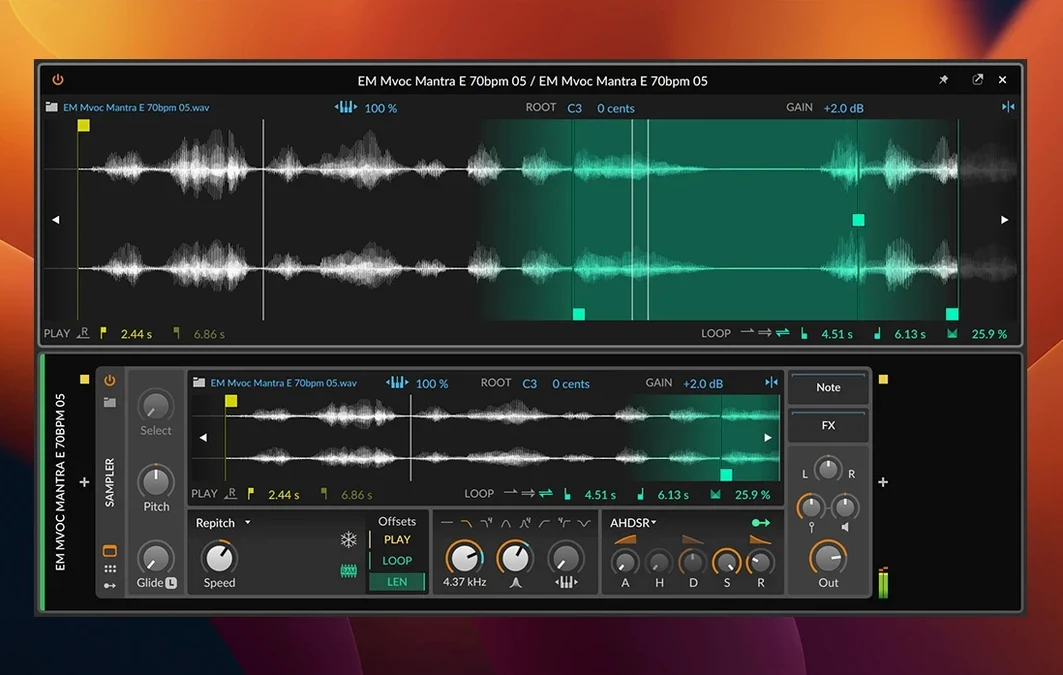
Drag any audio clip into the Sampler. The new slicing chops it up by transients straight away. Pick Spectral mode and the sound turns into a shifting, blurred texture. Fragments mode does granular-style glitches. Both are fast ways to turn a short sample into a bed of sound.
Add a modulator
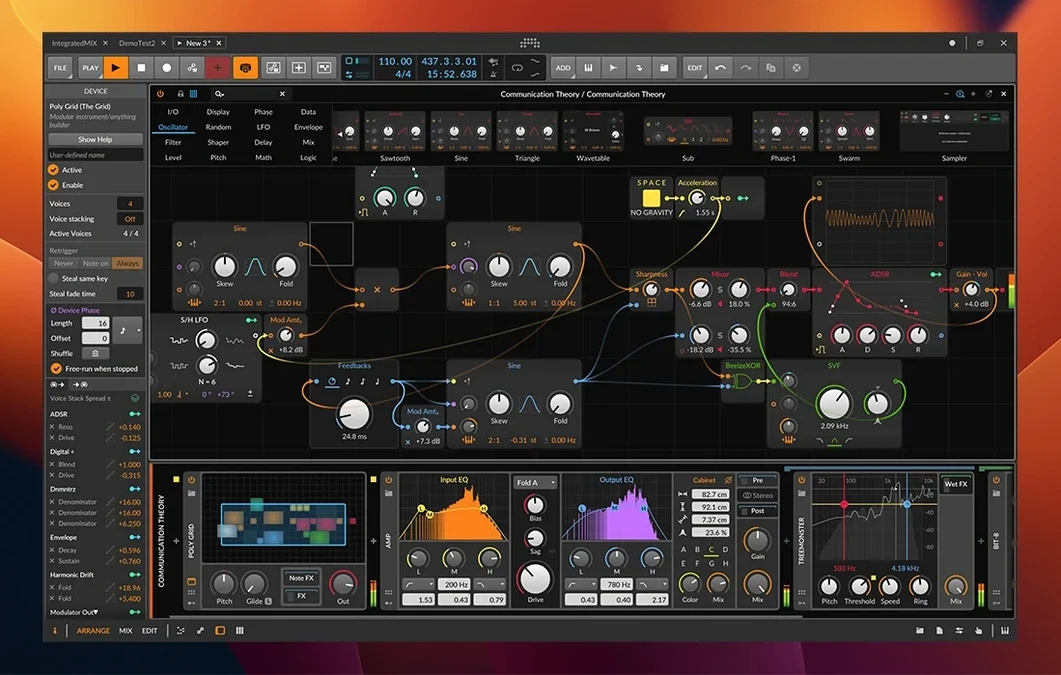
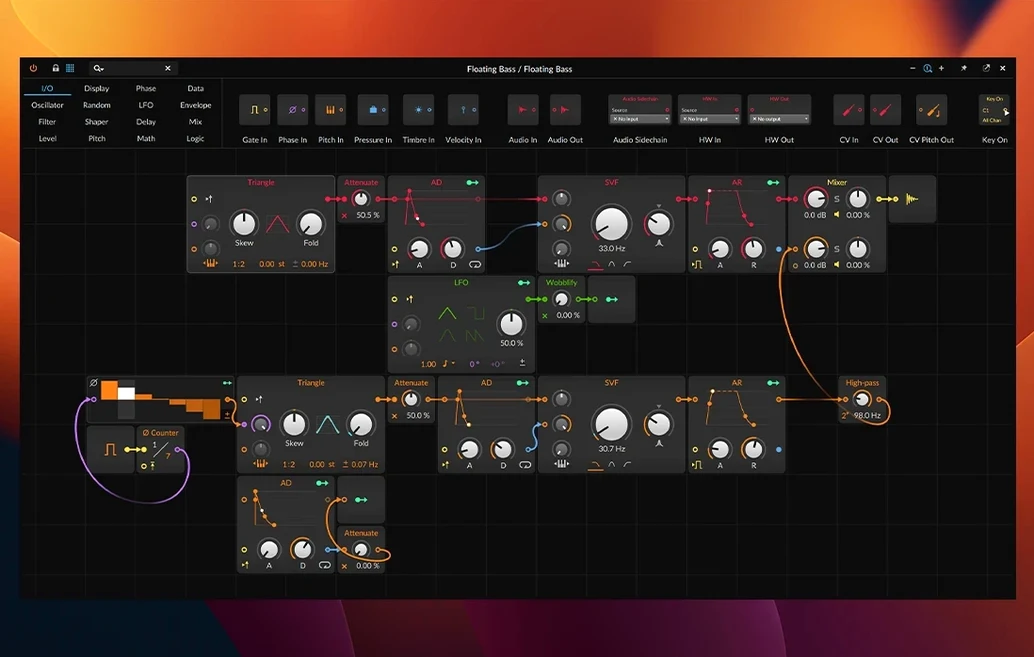
Bitwig’s modulation system lets any knob talk to any other. Right-click a filter cutoff, pick an LFO, and you’ll see a little cable appear. Grab the LFO rate and wiggle it — the plug-and-play wiring means you hear the change straight away. Stack a second modulator on the same control to get movement that never repeats.
Edit per-note expression
Record a simple MIDI line, open the piano roll and look for the extra lanes below each note. You’ll find Velocity, Gain, Pan, Timbre and Pressure waiting. Draw a quick pressure curve across a held chord and the sound breathes differently. With a ROLI Seaboard or LinnStrument plugged in, you can perform those gestures live and then tidy them up afterwards.
Rearrange the interface
The whole window is panels pinned together. Drag the device chain to the right edge, pull the mixer down to the bottom, or float the piano roll on a second screen. A setup that works for sound design might not suit mixing — shift things around as the job changes.
Shortcuts that save clicks
Most people reach for the mouse to drag a device into the chain. Press Shift+Return instead and the browser pops open with a search box already focused. Type "comp" and hit Enter — Compressor lands in the device slot before your hand leaves the keyboard.
A few other ones worth knowing:
- B toggles the pencil tool. Tap it, draw a note, tap it again before you draw something by accident.
- Alt+click any knob or slider to reset it. Works on mixer faders, EQ bands, even mod amounts.
- Ctrl+Shift+D duplicates a clip in place. Faster than copy-paste when you want the same four bars twice.
- Double-click on an empty area of the device panel adds a new track. No need to hunt for a button.
MIDI mapping is another one that sits in plain sight. Press Ctrl+M, click a parameter, then wiggle a knob on your controller. Done. Mapping stays saved with the project.
Tweaks that make it feel like your own space
The defaults work, but a handful of tweaks make the app feel less like a demo and more like your own space. Head to Dashboard > Settings and try these:
- Default new audio track inputs. Set them to your actual interface inputs. Saves the ritual of re-selecting every time you arm a track.
- Auto-save interval. Bump it down to three minutes. Bitwig crashes are rare, but a corrupted project file hurts less when you only lose two minutes of tinkering.
- Record folder location. Point it at a drive with plenty of room. The default is inside your user folder, and that fills up quicker than you expect once you start multi-tracking.
- Plug-in sandboxing. Turn it on. If a freeware VST misbehaves, it crashes its own little process and leaves your session intact.
Under User Interface, knock the animation speed up a notch. Knobs turn snappier, mod cables draw faster, and the whole window feels tighter. If you are on a machine that chugs with multiple displays open, switch HiDPI scaling off and reclaim a bit of GPU headroom.
When a dodgy VST freezes the startup scan
Plug-in scan hangs on startup. This usually means one dodgy VST is freezing the scanner. Hold Alt while Bitwig launches — it skips the scan and opens with only built-in devices. Then go to Settings > Locations and remove half your plug-in folders to narrow things down.
Audio crackles with a low buffer. First suspect is a plugin that reports zero latency but actually needs a block of samples to think. Bounce the track to audio temporarily or increase the buffer to 512 samples. If crackles remain, check that your audio interface sample rate matches the project — a mismatch between 44.1 kHz and 48 kHz trips up more sessions than you would believe.
The Sampler says "unknown tempo" and slicing looks wrong. Right-click the audio event and choose Detect Tempo. The automatic detection is good but not psychic — a loose drum break with no clear transient pattern sometimes needs a manual tap. Click the little metronome icon in the clip inspector and tap along to set the grid yourself.
Modulation routings vanish after re-opening a project. This can happen if you opened the project on a different machine or moved plug-ins around. The mod system stores device IDs, not names. If a device is missing, Bitwig silently drops the connection. Load the same device back into the slot and the cable reappears.
- Sampler rebuilt with slicing, plus Spectral and Fragments play modes
- Automatic tempo and pitch detection added
- macOS 12 Monterey or newer
- Intel or Apple Silicon Mac
Questions from the bench
Can Bitwig Studio work with microtonal scales?
Yes, it includes microtonal editing tools so you can compose and edit with scales beyond the standard twelve notes.
Does Bitwig run on older Intel Macs?
It runs on both Intel and Apple Silicon Macs, as long as you have macOS 12 Monterey or newer.




 Back up
Bench talk (0)
Sign in or get a library card to pin up a note.
Nobody has chimed in on this card. If you have used it on an old Mac, say which one.