
BetterDisplay Pro 5.0.6 — Mac version
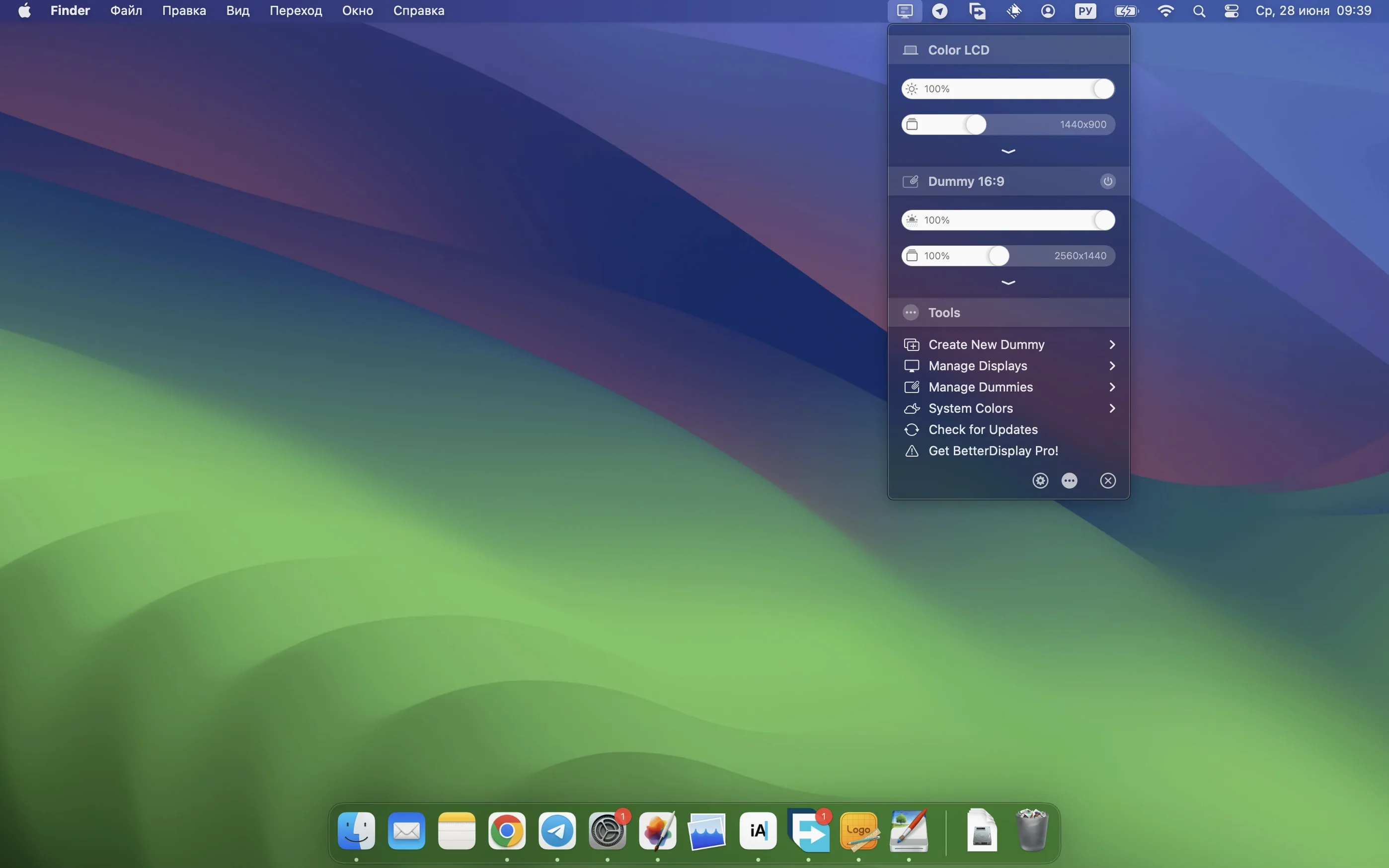
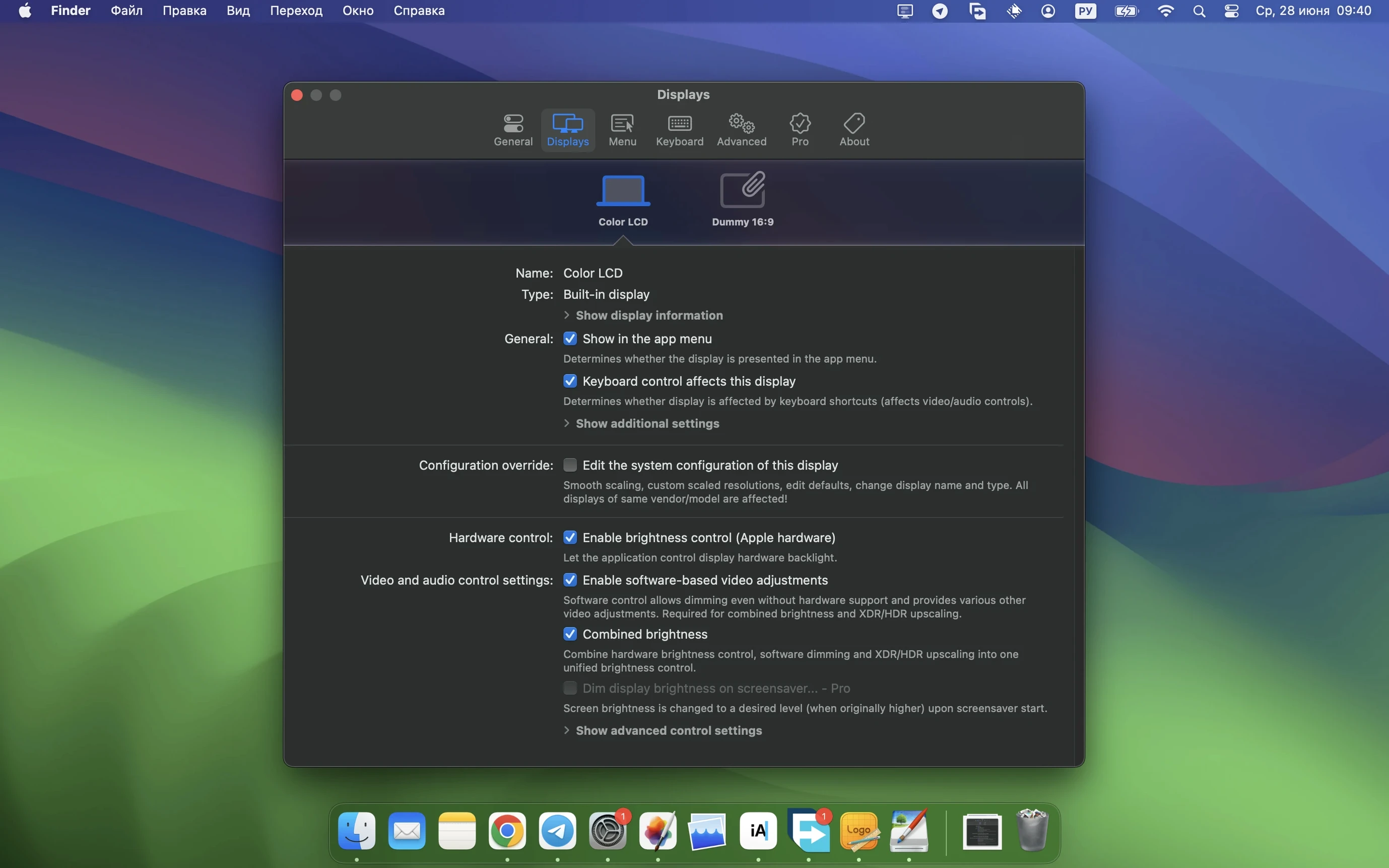
BetterDisplay Pro is the tool that lets you boss your Mac screens around properly. We're going to use it to fix a common annoyance: getting a crisp 1440p HiDPI workspace on a decent 4K monitor that macOS only offers blurry scaling options for.
Unlocking hidden HiDPI resolutions on external displays
- Unlocking HiDPI resolutions macOS hides from your external display
- Adjusting brightness, contrast and colour without fumbling for monitor buttons
- XDR/HDR brightness upscaling on compatible Apple Silicon Macs
- Creating virtual screens for streaming or screen sharing
- Applying custom 3D LUTs for colour-accurate work
DDC control depends on your monitor and cable
- Needs a bit of clicking around to understand the display configuration panels
- DDC features rely on your monitor supporting it over the video cable
- Virtual display and Picture-in-Picture features are Pro-only
Open the app and find your external display in the menu bar dropdown. Head into its configuration and tick Flexible Scaling. Now you can pick a HiDPI resolution that actually uses the full panel—text goes sharp, interface elements sit at a sensible size, and you're not squinting at tiny menus.
While you're there, assign the keyboard brightness controls to that screen via the app's DDC settings. The 5.0.6 update made this multi-display DDC control quicker, so the response is near-instant. If the room gets dark, the full black dimming feature drops the backlight lower than your monitor's own controls allow.
How the virtual display tools compare to Lunar
There are a few other Mac display tools knocking about. Here's how BetterDisplay Pro sits alongside them.
Lunar is the closest cousin. It does DDC brightness and contrast well, and it handles multi-monitor setups nicely. Where BetterDisplay pulls ahead is scaling. Lunar doesn't give you the HiDPI override system—you're stuck with whatever macOS decides to offer your display. If you need crisp text on a 1440p-equivalent workspace from a 4K screen, BetterDisplay is the one that sorts it. Lunar also lacks virtual displays and Picture-in-Picture, so streamers and screen-sharers get more from BetterDisplay right away. Lunar's interface is tighter and more polished out of the box, but BetterDisplay gives you deeper control once you poke around.
MonitorControl is the lightweight option. It does brightness and volume over DDC, and that's about it. It's open source and dead simple. But it has no scaling tricks, no colour adjustments, no virtual screens, and no HDR brightness upscaling. If all you need is brightness keys for an external monitor, MonitorControl does the job without fuss. BetterDisplay Pro is for when you want the whole toolkit.
DisplayBuddy focuses on DDC control with a slick visual design. It's pleasant to use and handles presets well. But again—no flexible scaling, no HiDPI overrides, and no virtual display support. It aims at a narrower problem and solves it nicely. BetterDisplay Pro covers that ground and then adds a layer of display configuration that the others simply don't touch.
If you've grabbed a better display torrent or looked up betterdisplay pro crack searches, you'll find the same full feature set regardless—the app doesn't gate anything behind an activation check. That means you can try the Pro features without jumping through hoops.
Fitting BetterDisplay into your Mac setup
BetterDisplay slots in alongside the tools you already use rather than trying to replace them.
With macOS Display Settings: Think of BetterDisplay as the advanced panel Apple didn't build. You still set arrangement and main-display selection in System Settings. BetterDisplay handles the resolutions, scaling modes and colour tweaks that sit below what macOS exposes. The two coexist—BetterDisplay applies its overrides on top of the system's baseline config.
With Night Shift and True Tone: These system features keep working. If you apply a colour profile or 3D LUT in BetterDisplay, it layers on top. You might find Night Shift makes a calibrated LUT look off, so try toggling it off for colour-critical sessions.
With Streaming and recording apps: The virtual display and Picture-in-Picture features really shine here. Create a clean 1080p virtual screen for OBS so your stream layout doesn't get messed up when you unplug a monitor. The Picture-in-Picture window floats a live view of any display—handy for keeping an eye on a presentation screen while you work on your main display.
With Keyboard brightness keys: Once you map your keyboard brightness controls to an external screen via DDC, they behave like the built-in display keys. The 5.0.6 release sped up multi-display DDC, so if you have two externals, each can get its own key mapping without lag.
With Colour calibration tools: If you use a colorimeter and software like DisplayCAL, you can load the resulting 3D LUT straight into BetterDisplay. This means your calibration stays applied system-wide, even through reboots, without needing a separate loader app running in the background.
Flexible Scaling stays greyed out on mirrored displays
Things don't always work first time. Here's what crops up.
Flexible Scaling is greyed out. This usually means the display is mirrored or Sidecar is active. Un-mirror the displays first. If that's not it, try disconnecting and reconnecting the monitor—some docks need the handshake to complete before BetterDisplay can read the full EDID.
DDC controls don't respond. DDC travels over HDMI, DisplayPort and USB‑C, but not every monitor implements it, and some docks strip DDC signals. Test with a direct cable connection to rule out the dock. Also check the monitor's on-screen menu—some have a setting to enable or disable DDC/CI. If you searched for a BetterDisplay Pro crack or BetterDisplay Pro Mac crack hoping for a fix, the issue isn't the app version; it's the hardware chain.
XDR/HDR brightness upscaling not available. This needs an Apple Silicon Mac and a display that reports HDR capability. On Intel Macs, the option won't appear. On Apple Silicon, make sure HDR is enabled in macOS Display Settings for that screen first.
Menu bar icon disappears. macOS might hide it if your menu bar is crowded. Hold Command and drag the icon to reposition it. If Bartender or Hidden Bar is managing your menu extras, check it hasn't been moved to the overflow section.
Virtual display won't create. You need the Pro features active. If the button does nothing, check that no other virtual display driver is conflicting—apps like AirDisplay or older versions of Duet can clash. A restart clears the virtual display framebuffer if it gets stuck.
Set your HiDPI scaling baseline before anything else
Once BetterDisplay is installed, a few small moves make it feel natural.
- Set your scaling baseline first. Go to each external display's config, enable Flexible Scaling and pick the HiDPI resolution that suits your eyes. Do this before tweaking brightness or colour—the resolution sets the foundation.
- Map brightness keys immediately. In the DDC section, tick the box to bind keyboard brightness controls. If you have multiple externals, map each one separately. You'll forget within a day that you ever reached for monitor buttons.
- Create a couple of virtual display presets. If you stream, make a 1080p virtual screen and name it after your streaming layout. Save it so you can enable it with two clicks before going live.
- Leave colour adjustments until day two. Give your eyes time to adjust to the new scaling. Then experiment with the colour panel—small contrast tweaks often make a bigger difference than you'd expect.
- Check for a better display download update every few weeks. waydabber ships fixes regularly, and 5.0.6 brought sharper sharpening effects and smoother DDC. Keeping current means fewer quirks.
- Quicker DDC control when you're running more than one screen
- Device control setup is less fiddly now
- Sharpening can be dialled up further
- Video filter automation for streamers
- macOS 26 or newer
- Apple Silicon or 64-bit Intel Mac
Questions from the bench
Can BetterDisplay Pro add HiDPI modes to any external monitor?
It can convert many standard displays into fully scalable screens and offer flexible HiDPI scaling, provided the monitor and connection support the required bandwidth.






 Back up
Bench talk (0)
Sign in or get a library card to pin up a note.
Nobody has chimed in on this card. If you have used it on an old Mac, say which one.