

Binary Ninja 6.0.10601-personal — Mac version
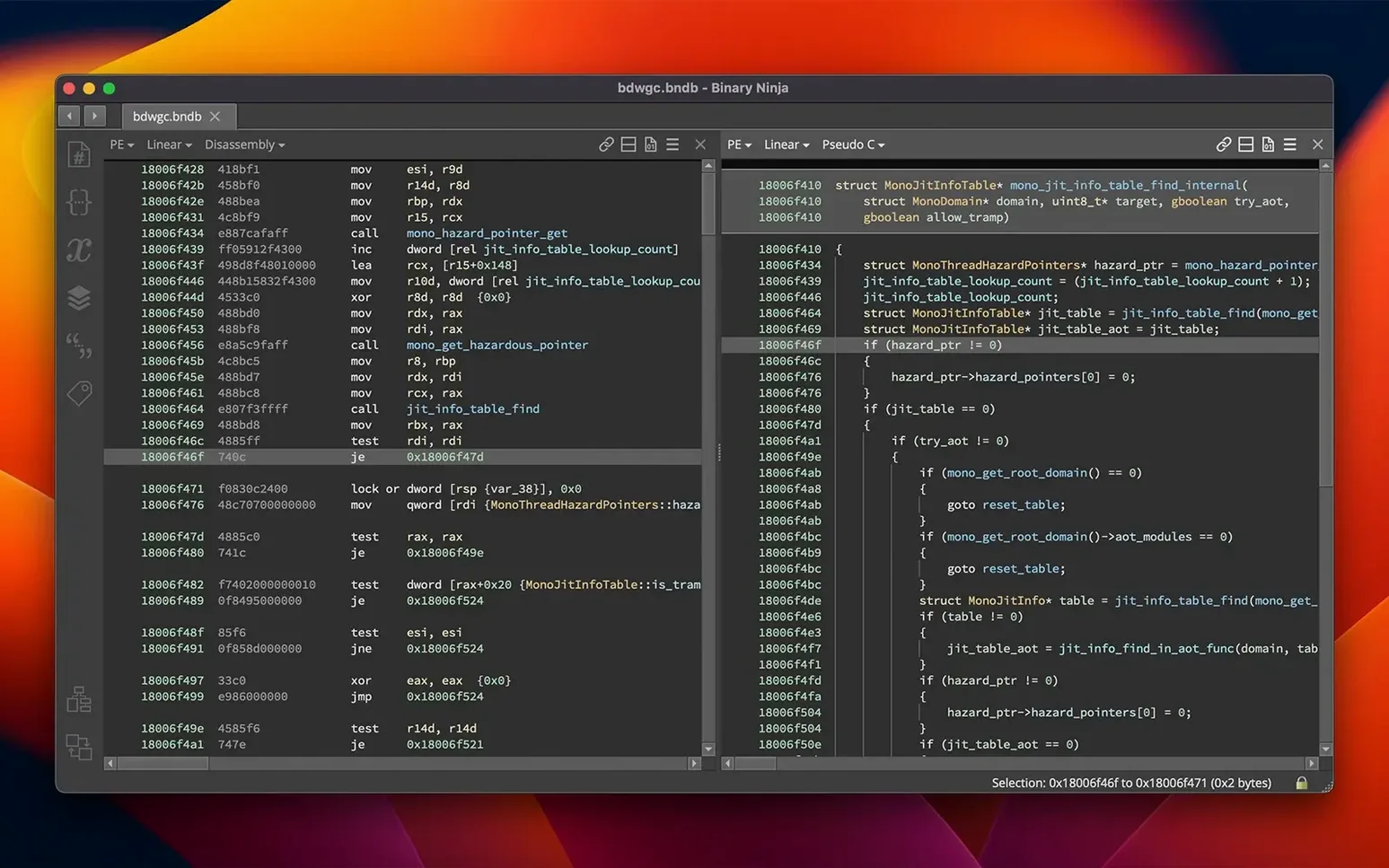
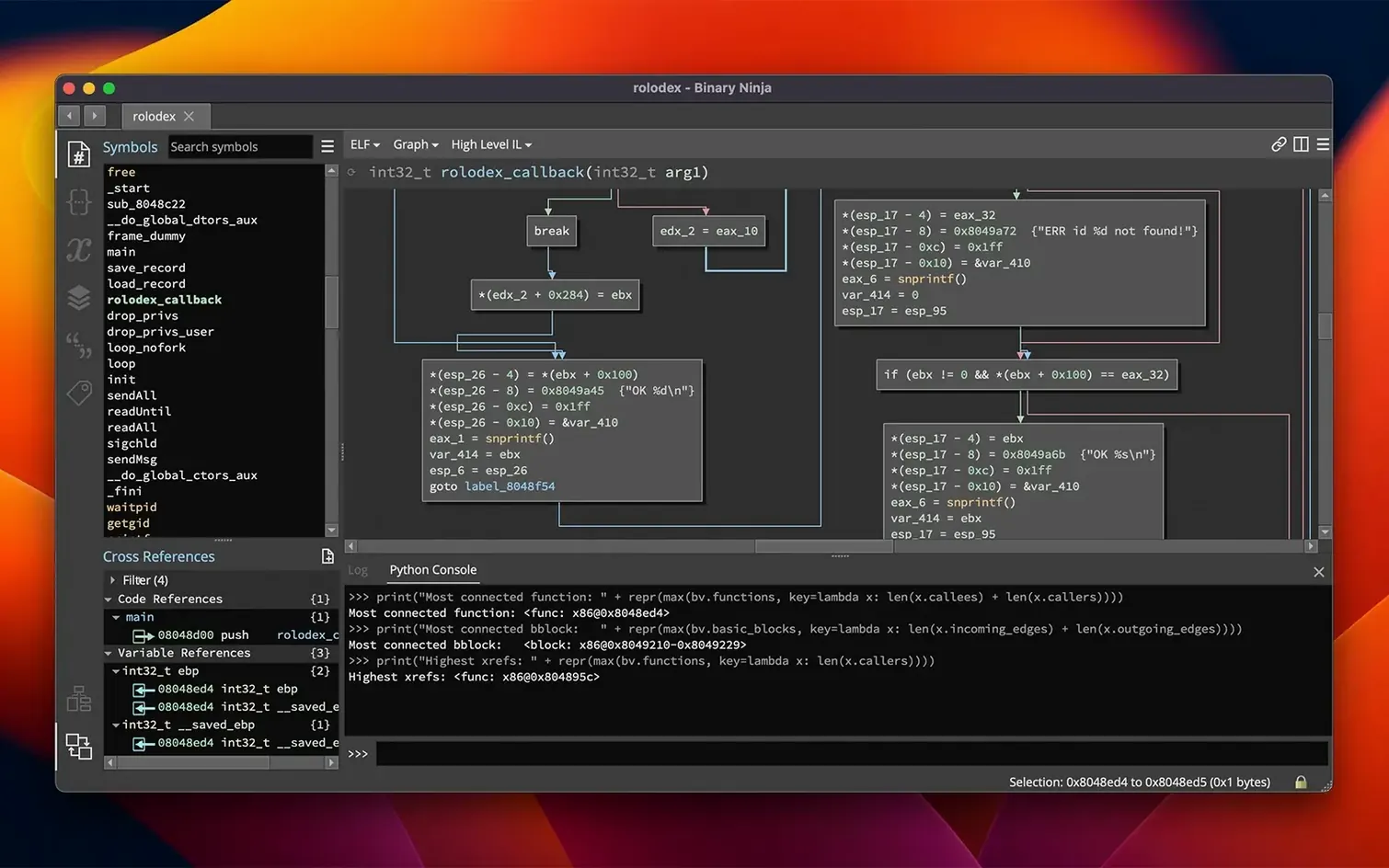
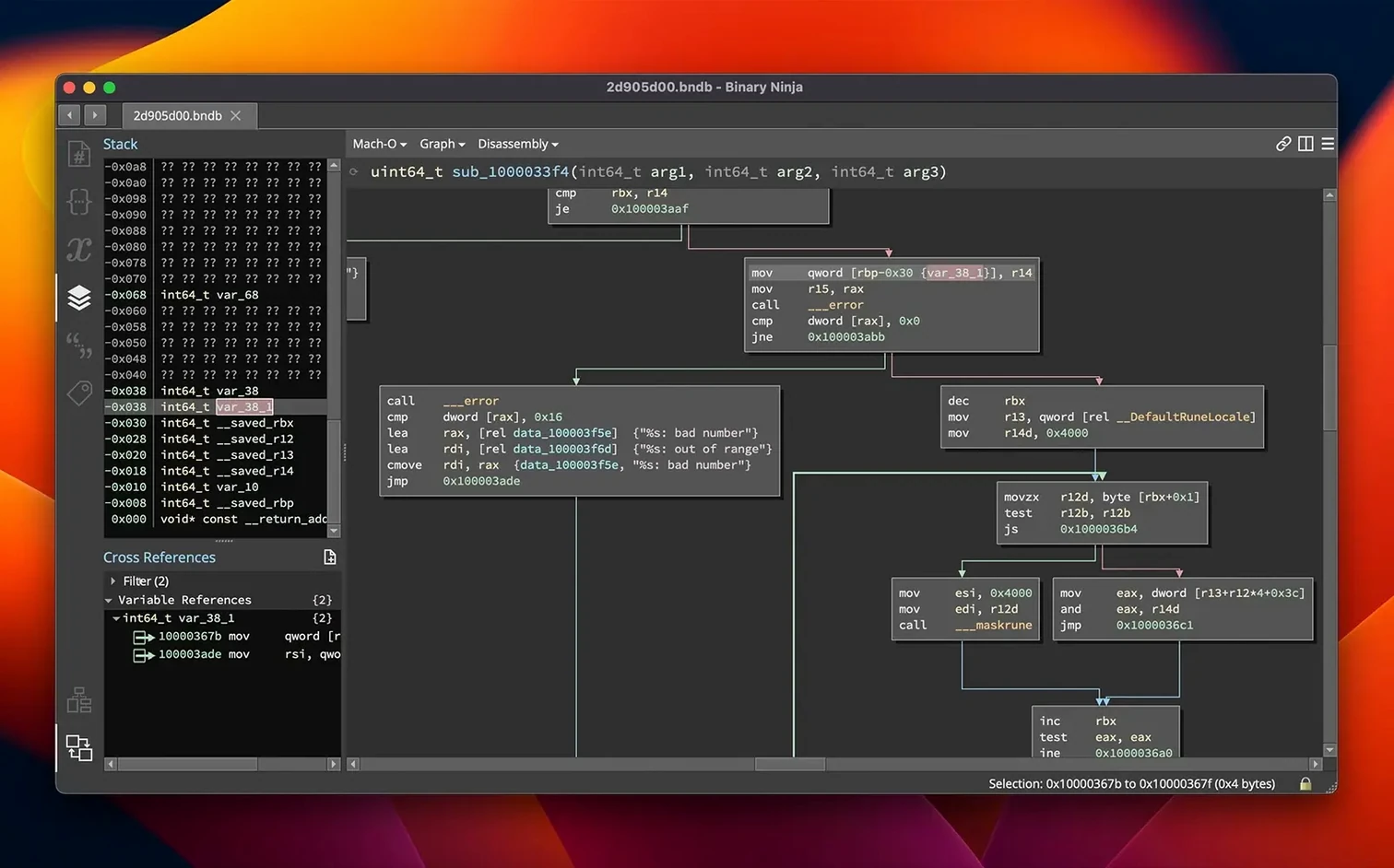
Security researchers, malware analysts, and curious tinkerers reach for Binary Ninja when they need to pull apart a program and see how it ticks. It takes a compiled binary and gives you back something you can read — disassembly, a C decompilation, or the platform's own intermediate language, BNIL.
Version 6.0 is a major refresh. It bundles a new MCP server and a Binary Similarity feature that helps you spot matching code across files. The old Plugin Manager has been rebuilt as the Extension Manager, and the TMS320C6x architecture joins the supported list. Under the hood, you get better memory usage, a refactored calling convention, and structure initialisers in the High Level IL.
Inline patching with C and headless automation
- Patching a binary by editing assembly, raw hex bytes, or compiling C inline with the built-in SCC compiler
- Running headless analysis without the user interface, handy for automated workflows
- Writing your own tooling through C++, Python, or Rust APIs
- Loading PE, Mach-O and ELF files on ARM and x86 64-bit macOS
Interface density expects reverse-engineering familiarity
- The interface can feel dense if you are new to reverse engineering — it is built for serious analysis
- Headless work and some advanced features need comfort with scripting or the command line
Ghidra opens doors, IDA polishes, Binary Ninja modernizes the middle
Binary Ninja sits in a small field alongside Ghidra and IDA Pro. Each has its own feel, and which one you reach for often depends on the job.
Ghidra is the heavyweight from the NSA — open source, strong decompiler, and packed with features. It runs on Java, though, and the interface shows it. Binary Ninja feels snappier on macOS. Launch it, load a binary, and you are working inside a couple of seconds. Ghidra projects need a bit more ceremony. Where Binary Ninja pulls ahead is the API. If you plan to write your own analysis scripts in Python or C++, the bindings are cleaner and the documentation gets you moving faster.
IDA Pro has been around for decades and still dominates in commercial vulnerability research. It supports more exotic architectures and its plugin ecosystem is enormous. But the user experience can fight you. Binary Ninja's control-flow graphs and cross-reference navigation feel more modern. Clicking through functions, renaming variables, applying types — it all happens with less friction. For someone getting into reverse engineering today, the learning curve with Binary Ninja is gentler without sacrificing depth.
Applying types turns messy decompiler output into clear HLIL
- Skipping the type system early on. The decompiler output looks messy until you start applying types. A function pointer left as a raw address confuses the whole call graph. Right-click, set a type, and the HLIL snaps into focus.
- Ignoring BNIL. Newcomers jump straight to the C decompilation and ignore the platform's intermediate languages. Medium Level IL and Low Level IL are where the real analysis happens — they let you trace data flow without compiler optimisation tricks getting in the way.
- Not naming things as you go. Reverse engineering is an accumulation of small discoveries. If you do not rename that function from
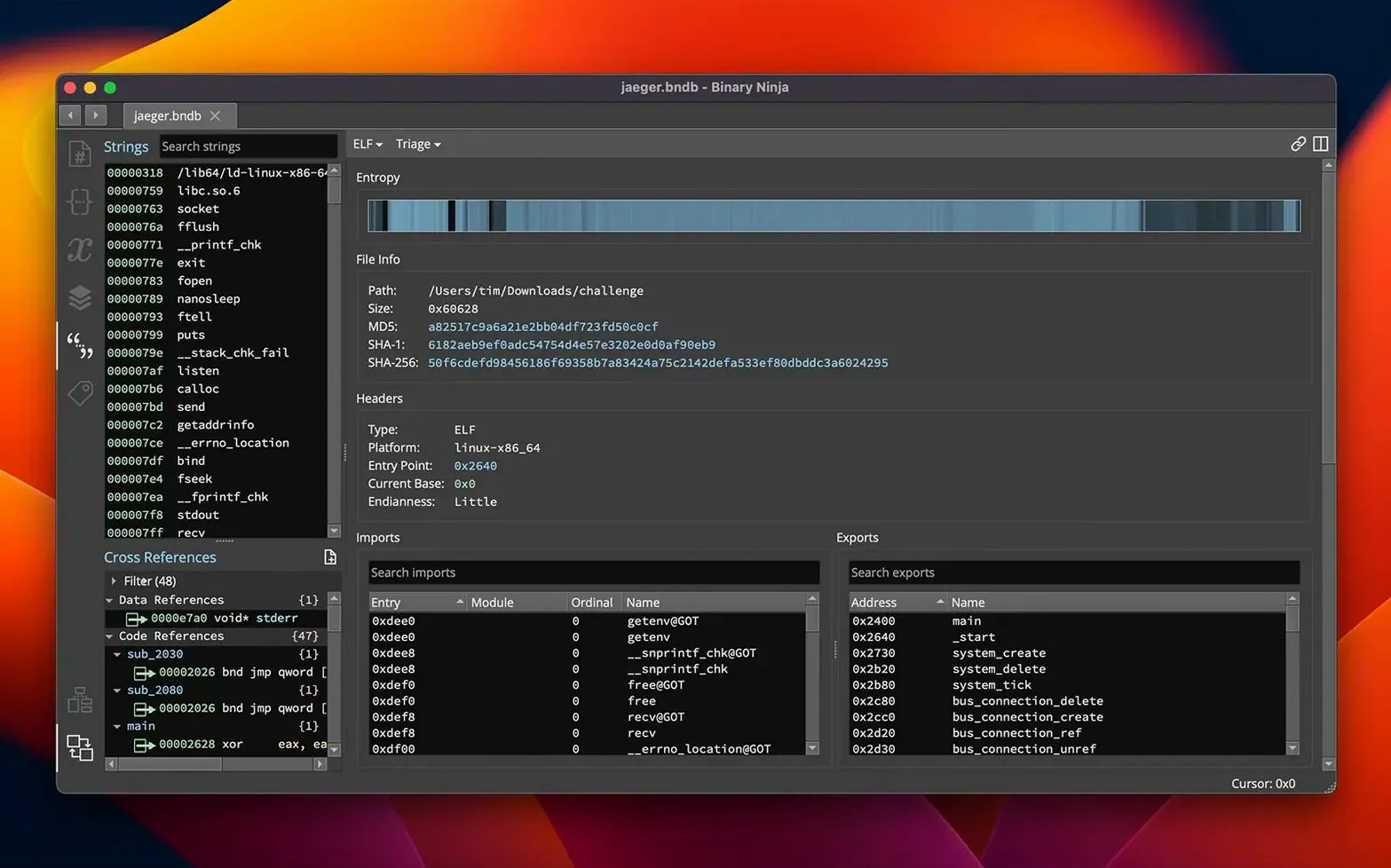
sub_401000toparse_packet_lengththe moment you figure it out, you will lose it twenty minutes later. - Trying to analyse an obfuscated binary cold. Run the entropy graph first. It highlights packed or encrypted sections and saves you staring at gibberish disassembly for an hour.
Scripted bulk analysis feeds annotated findings from a folder of samples
Binary Ninja plays well with the tools you probably already have open. The headless mode lets you script bulk analysis — feed it a folder of suspicious Mach-O samples and it spits out annotated findings while you work on something else. Pipe the output into radare2 for quick hex dumps or into a custom Python harness that cross-references strings against a threat-intelligence feed.
On the macOS side, the built-in file command and otool give you a first glance at a binary. When you need a deeper look, Binary Ninja picks up where they stop. Drag a binary from Finder straight onto the dock icon, or right-click an executable and open it directly. The Extension Manager makes it easy to pull in community plugins that connect to Wireshark captures for protocol analysis or export control-flow graphs to Graphviz for documentation.
One practical tip: use the SCC compiler for patching. Edit the assembly, then compile a small C snippet to replace a chunk of logic without leaving the application. It saves round-tripping through Xcode for quick fixes.
- New MCP server and Binary Similarity feature for cross-file code matching
- Plugin Manager redesigned as the Extension Manager
- TMS320C6x architecture support added
- Performance and memory usage improvements across the board
- Refactored calling convention and HLIL structure initialisers
- Bundles Python 3.13 on Linux; migration wizard and debugger improvements included
- macOS 10.15 or later
- Runs on Intel and Apple Silicon Macs
Questions from the bench
What kind of output does Binary Ninja give you?
It can decompile code to C-like output or to BNIL, and it provides standard disassembly for all supported architectures.






 Back up
Bench talk (0)
Sign in or get a library card to pin up a note.
Nobody has chimed in on this card. If you have used it on an old Mac, say which one.