

Complete Anatomy 11.5 — Mac version
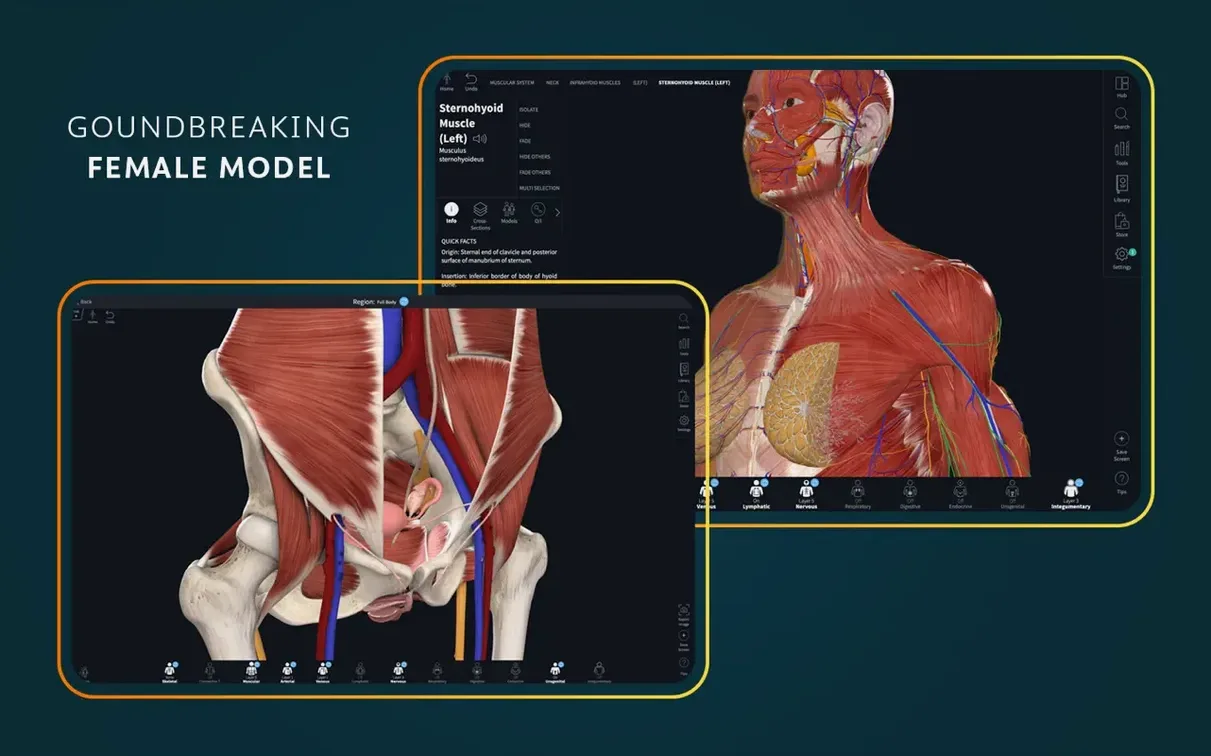
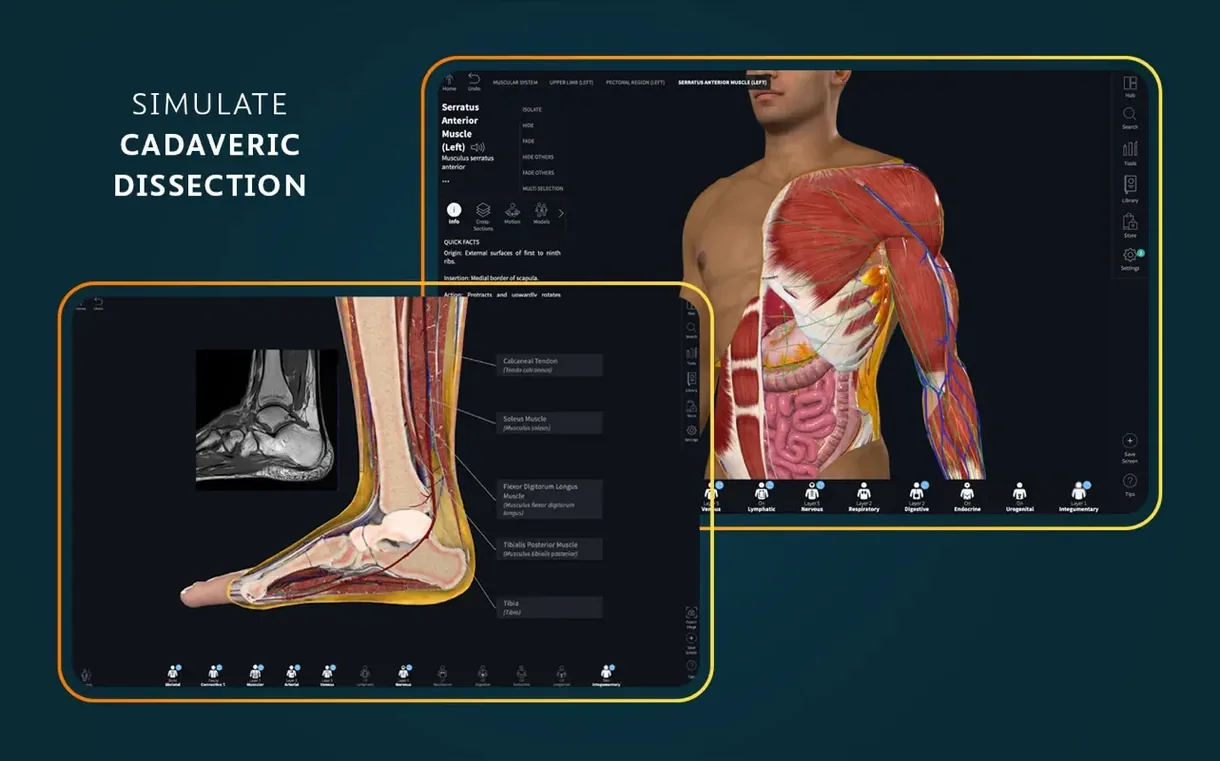
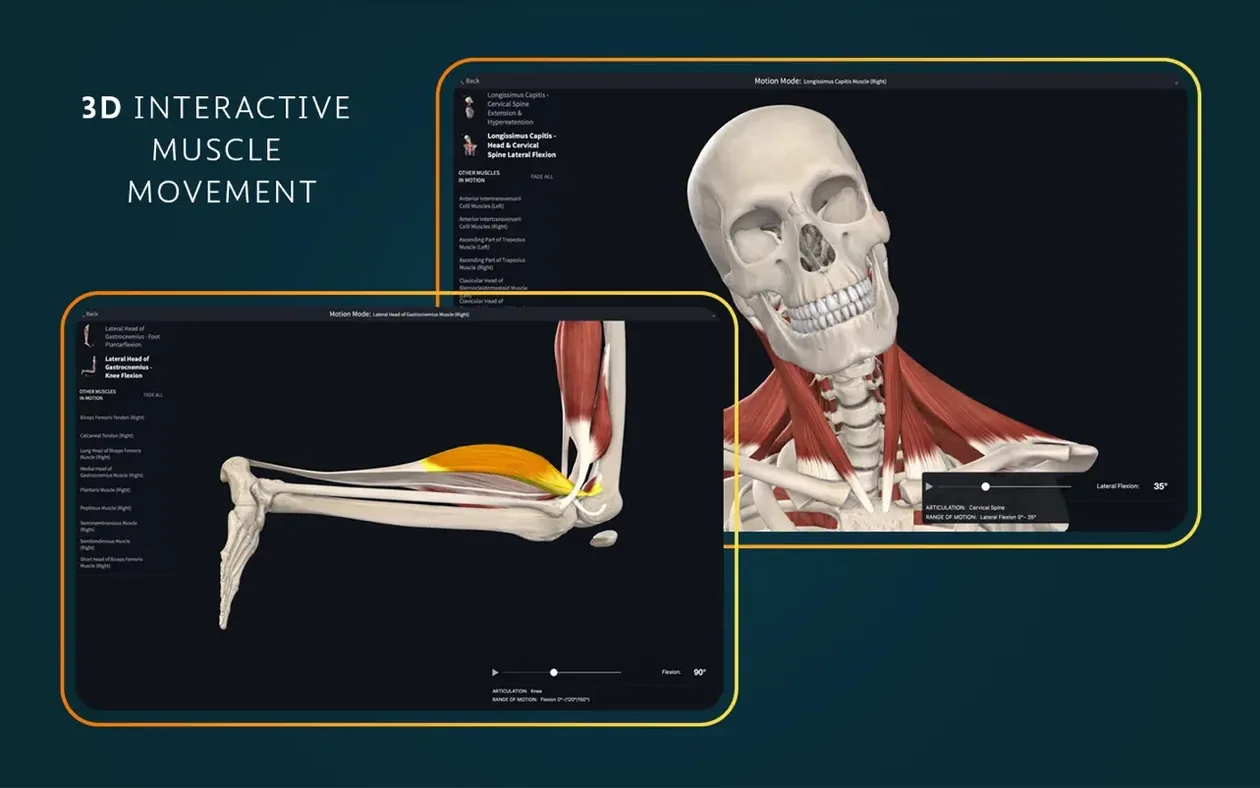
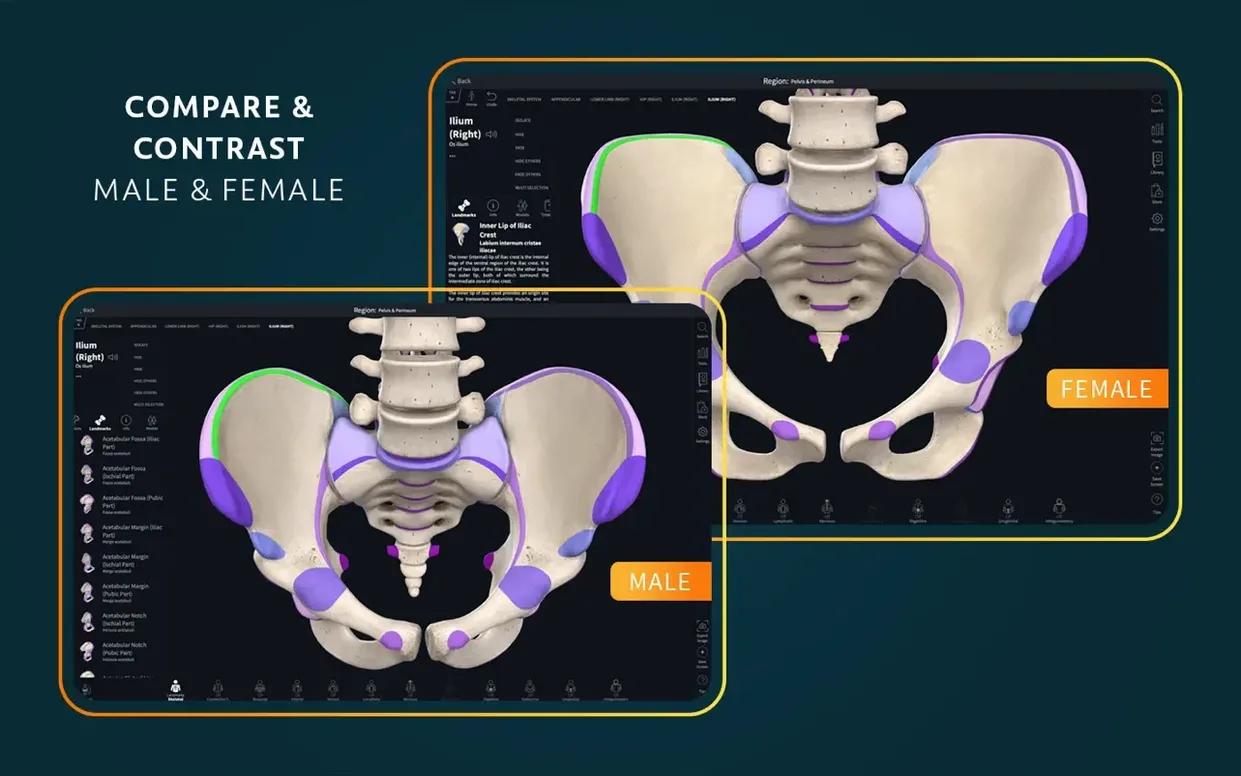
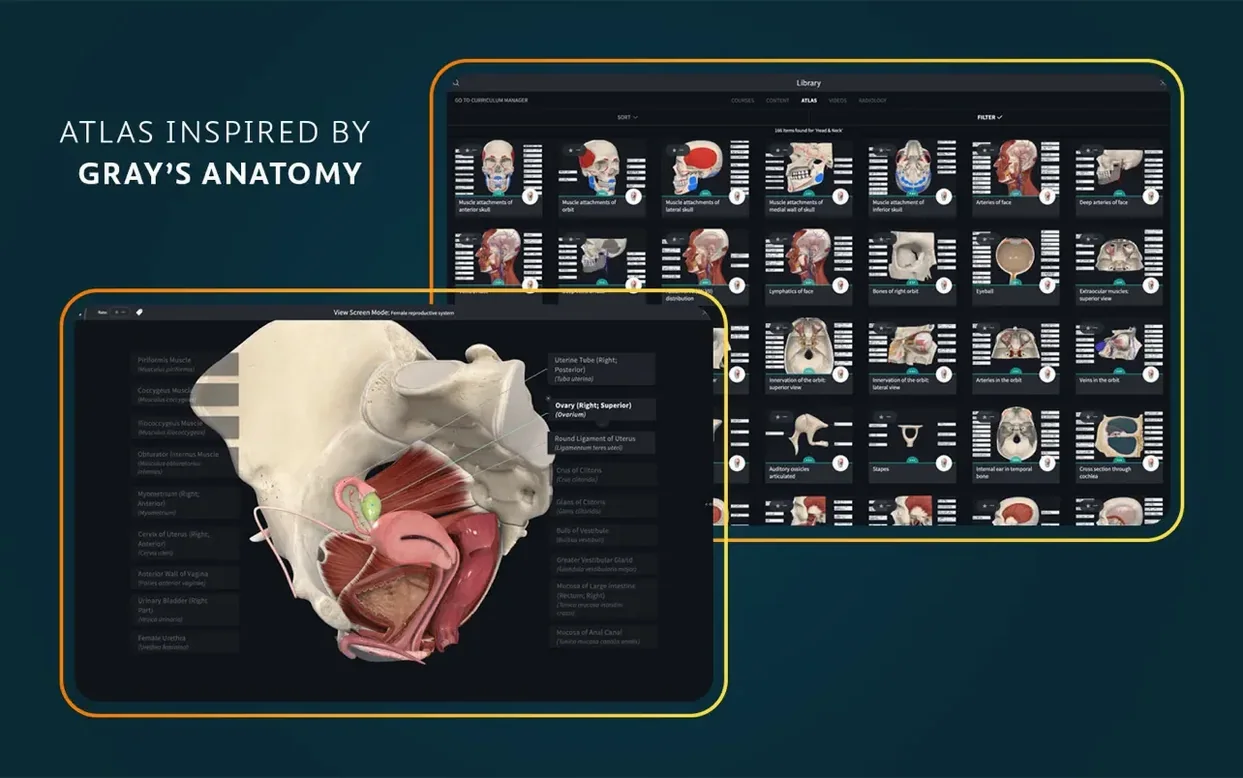
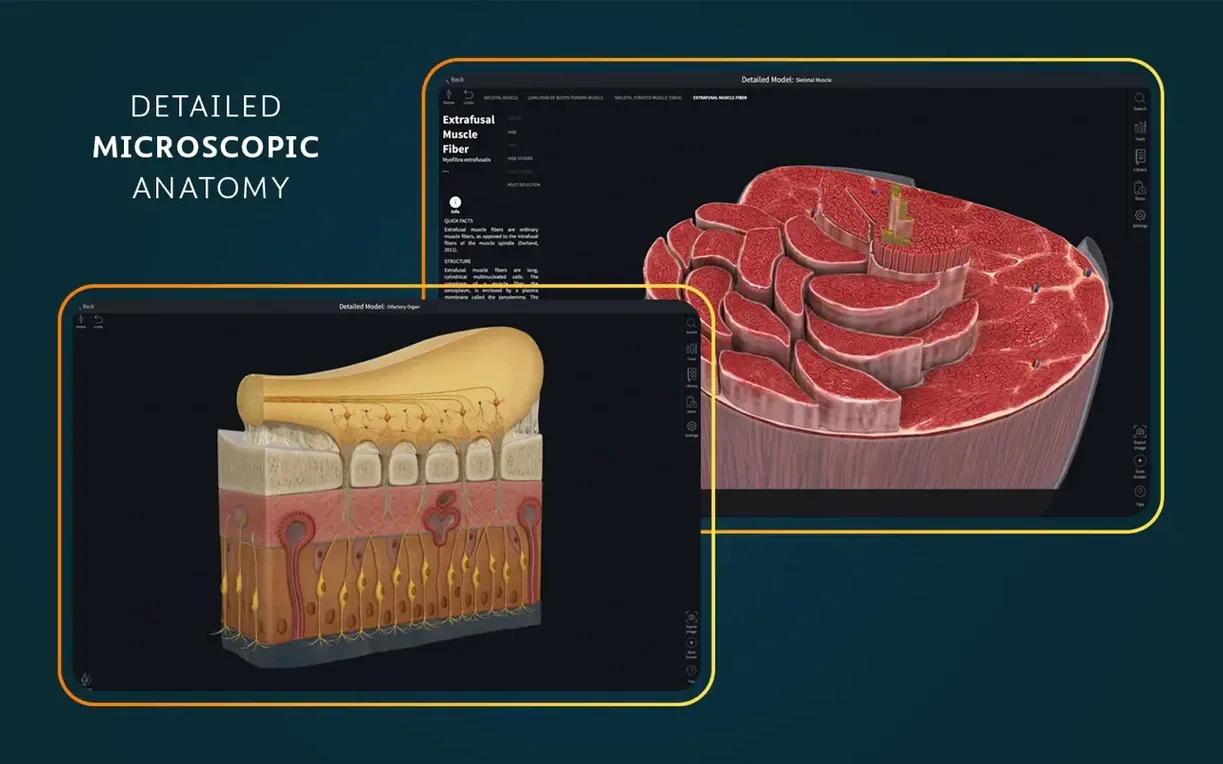
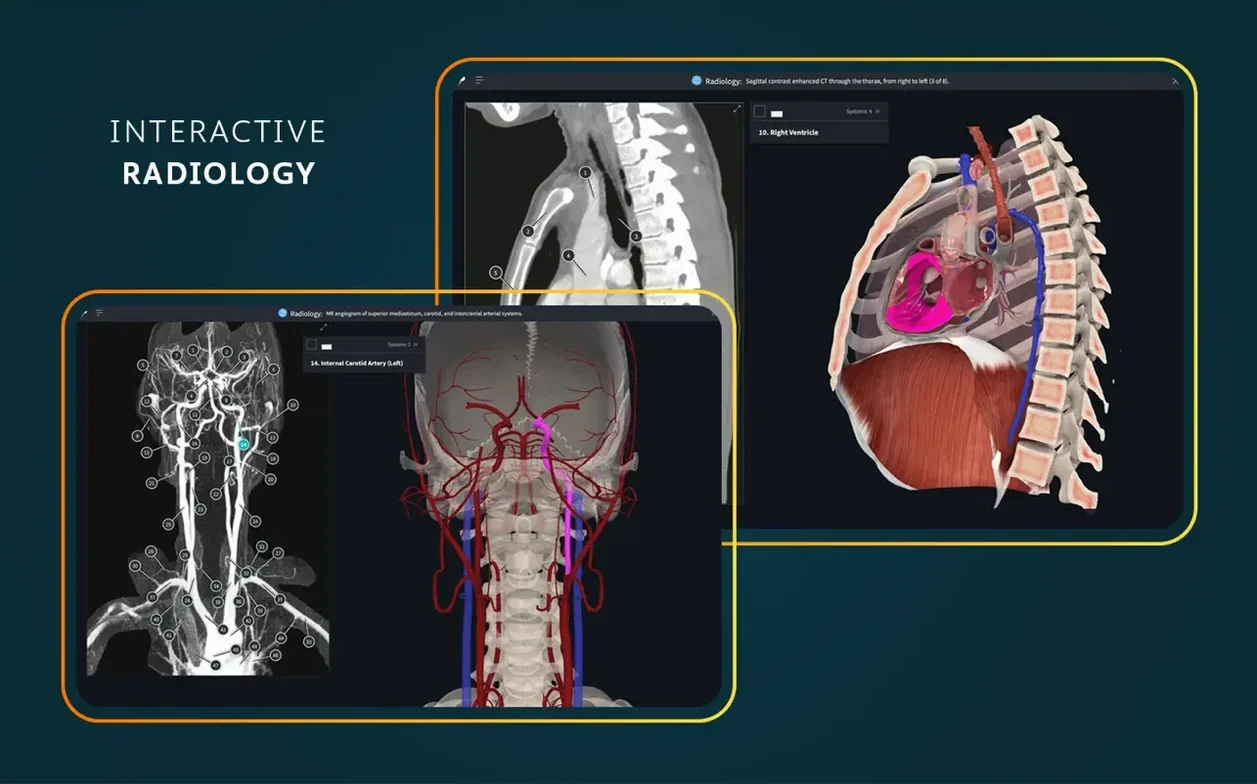
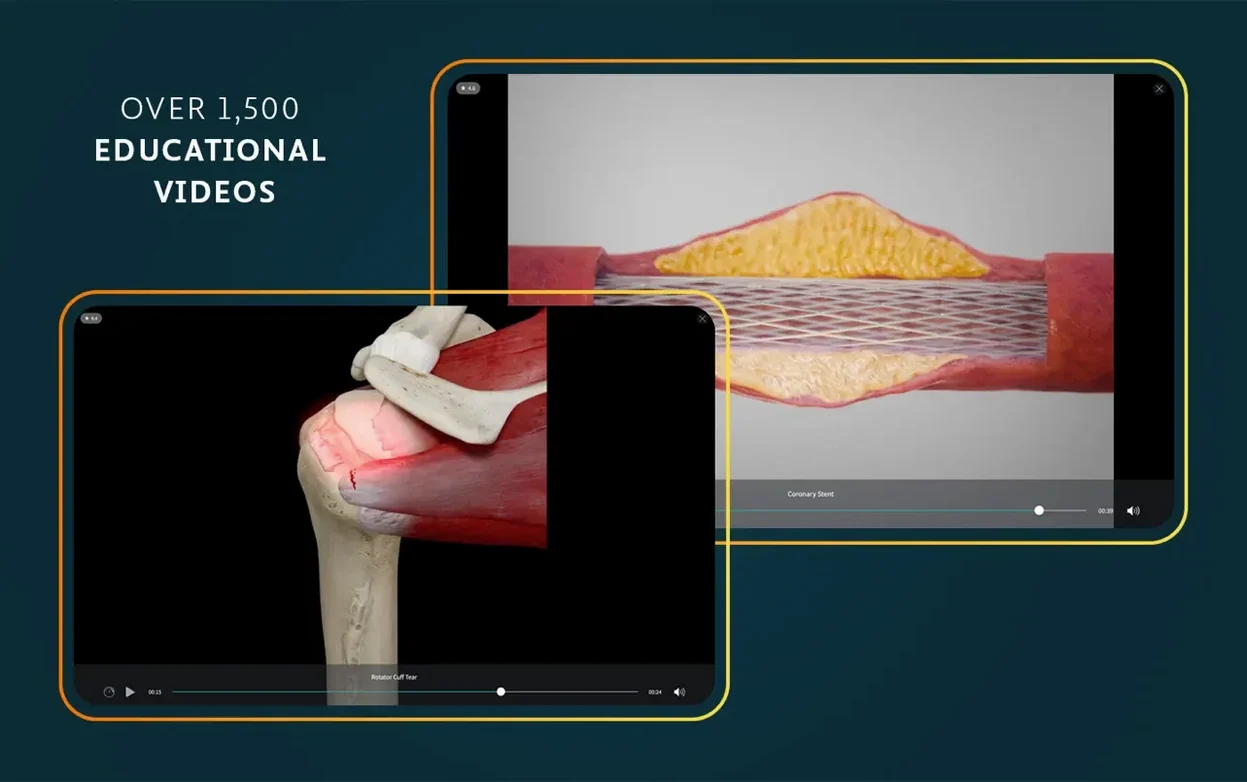
This app packs over 700 screens of interactive models, from a live beating heart you can dissect layer by layer, to real-time muscle movement maps. It's a proper 3D atlas.
Native Apple Silicon support means no Rosetta slowdown
You need macOS 11 (Big Sur) or newer. The app runs natively on both Apple Silicon and Intel Macs, so you won't lose performance to translation.
Get the lay of the land
Beyond the standard atlas, you get dynamic cross-sections, radiology views alongside the models, and a point-of-care ultrasound section. The female anatomy and dissection courses are part of the package too.
Log in to get going
After installing, you'll need a signed-in account to unlock the full features—this isn't an offline-only tool. The interface comes in English, German, Spanish, French, and Simplified Chinese.
Prepping for a musculoskeletal exam — step by step
- Pick your region. Open the model library and select the lower limb. Strip away skin and superficial fascia so you're looking at muscles.
- Isolate a group. Tap the quadriceps and choose "isolate" from the tool menu. Rotate the view with your trackpad to check origins and insertions from every angle. The real-time muscle movement feature lets you flex the knee and watch how the four heads coordinate — much more memorable than a flat diagram.
- Add radiology context. Toggle the radiology view so an X-ray or MRI slice sits beside the 3D model. Scroll through the cross-sections and you'll see how the vastus medialis oblique sits against the femur. That link between the scan and the model saves me hunting through a separate imaging atlas.
- Check microscopic structure. Open one of the 39 microscopic anatomy models for skeletal muscle. You can spin a sarcomere around and see how the banding pattern lines up. It's useful when a lecturer throws a histology slide into an anatomy spot test.
- Test yourself. Hide all labels, spin the model to a tricky posterior view, and try to name every muscle in the anterior compartment. When you're stuck, tap to reveal — the app doesn't judge.
Beating heart dissection, radiology views, and clinical videos added
Complete Anatomy vs. Essential Anatomy 5. Both come from the same family, but Complete Anatomy adds the beating heart dissection, the radiology views, and the clinical video library. Essential Anatomy 5 is lighter and launches faster on older Macs. If you just want a reference model, the smaller app works fine. If you're following a dissection course or need imaging correlation, Complete Anatomy is the one you'll actually keep opening.
Complete Anatomy vs. Human Anatomy Atlas (Visible Body). Visible Body's Mac app feels more like an encyclopaedia — lots of definitions, clean models, less emphasis on movement and dynamic cross-sections. Complete Anatomy leans harder into the "what happens when this moves" side of things. The AR mode and the point-of-care ultrasound section give it an edge if your course has a clinical focus early on. Visible Body's interface is a bit more forgiving for absolute beginners, though.
Dissection courses map directly to practical exam identification
First-year med students who need to pass practical exams tend to live in this app for a semester. The combination of dissection courses and the isolated model views maps straight onto the kind of stuff you'll be asked to identify in a viva.
Physiotherapy and sports-science learners get solid value from the real-time muscle movement — understanding how a rotator cuff works is one thing, watching it move while you rotate the shoulder joint is another. The clinical videos (over 1,500 of them) add context that a static atlas can't touch.
Anatomy instructors and tutors use it to prep teaching sessions. The dynamic cross-sections let them pull up a transverse slice mid-lecture without switching to a separate DICOM viewer. It won't replace a full radiology workstation, but for a tutorial on abdominal anatomy it's quicker than loading a PACS.
Casual learners or people just curious about the body might find it more than they need — the depth is aimed at serious study, not a five-minute browse. If you're looking for a complete anatomy mac download that fits a structured course rather than casual curiosity, this is it.
- Optimized support for iOS 26.
- macOS 11.0 or later
- Runs on both Apple Silicon and Intel Macs
- A signed-in account for full use







 Back up
Bench talk (0)
Sign in or get a library card to pin up a note.
Nobody has chimed in on this card. If you have used it on an old Mac, say which one.