
DjVu Reader Pro 2.7.2 — Mac version
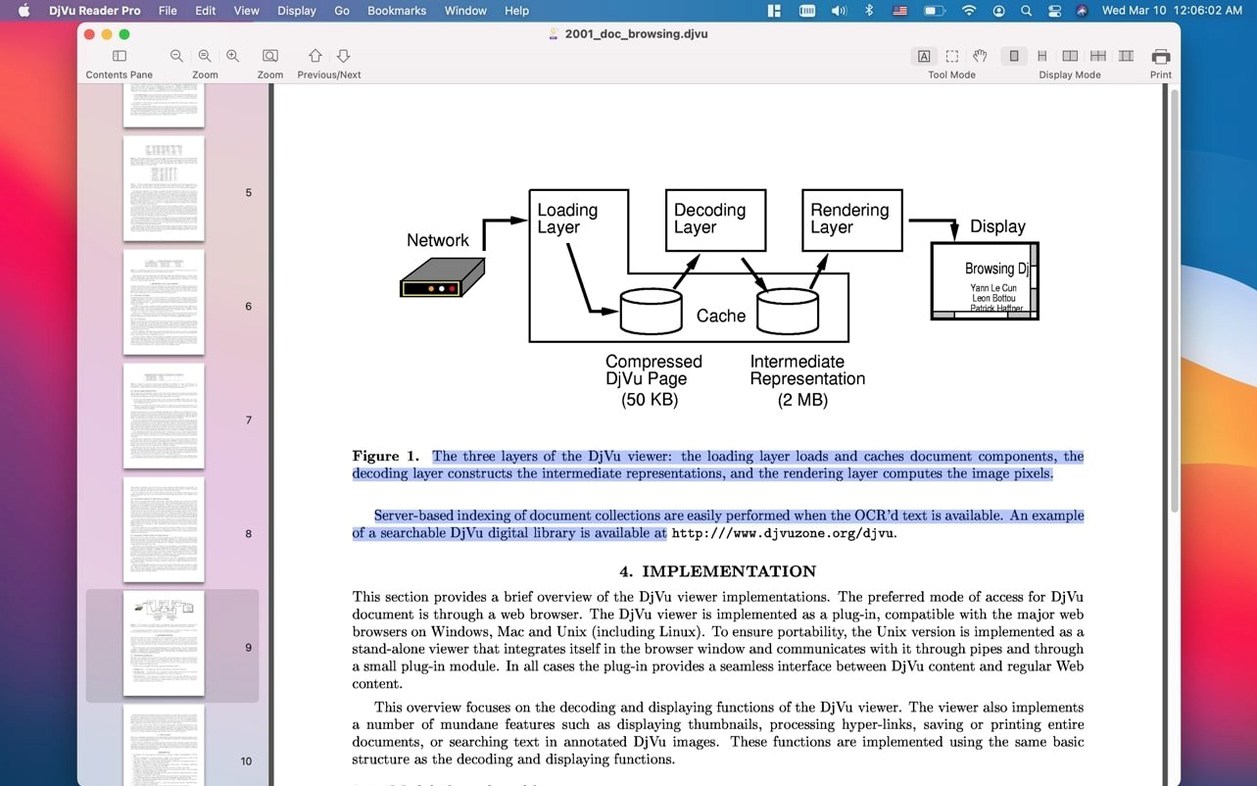
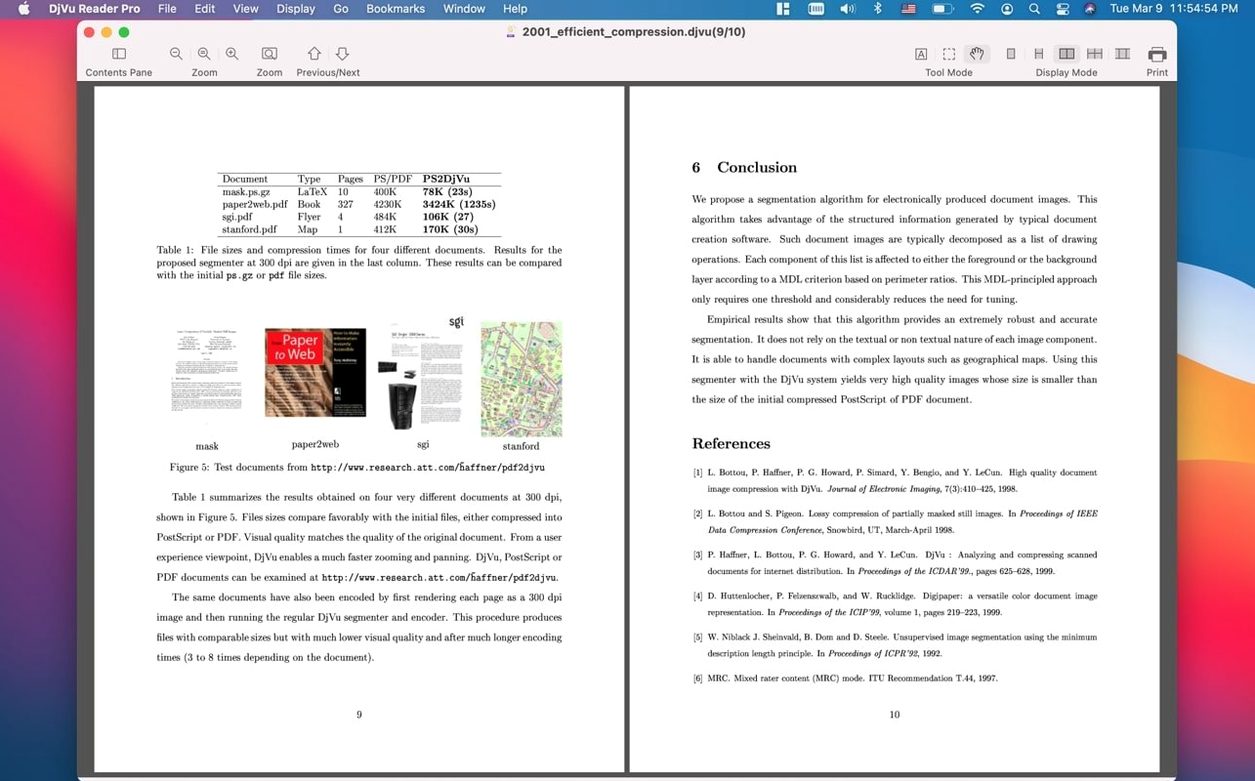
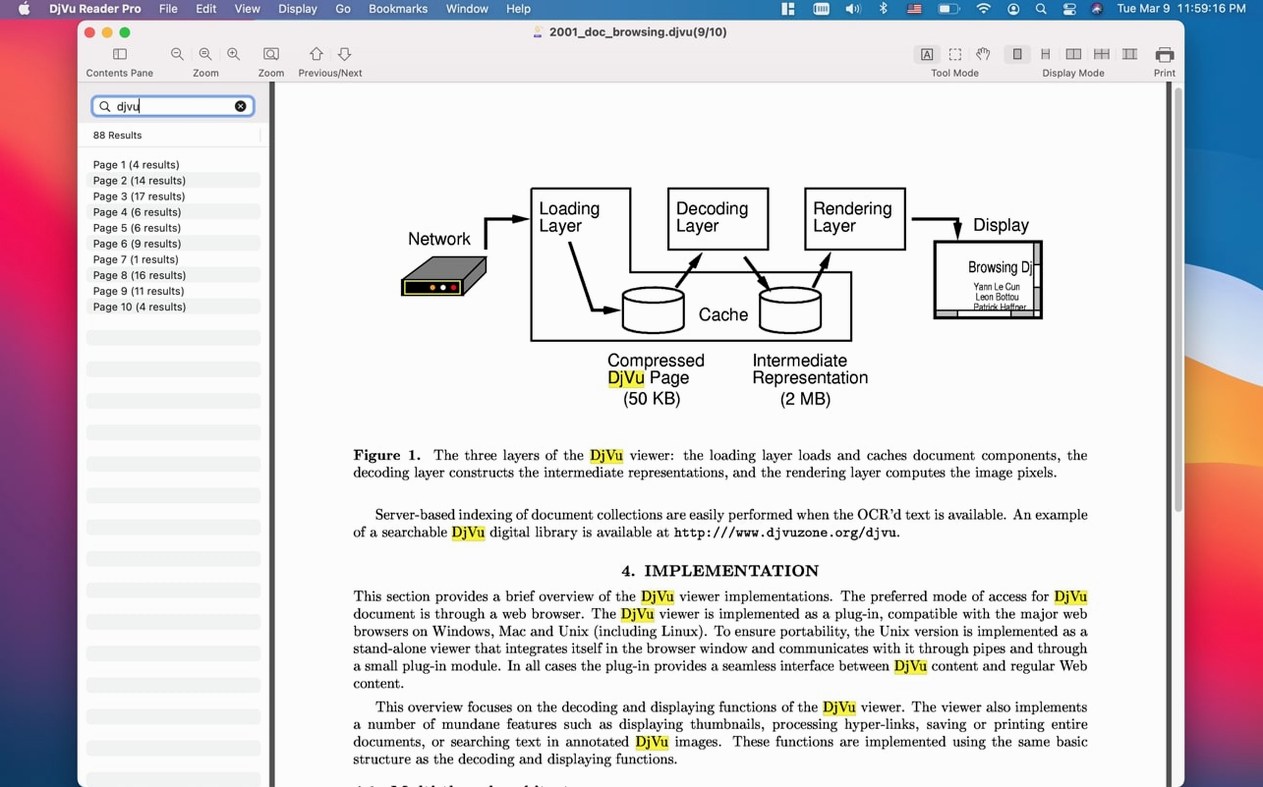
You've downloaded an old manual or a scanned book and it arrives as a .djvu file. Preview won't touch it. That's where DjVu Reader Pro slots in.
DjVu — a compact document format from the early 2000s, built for scanned pages. Common in older academic archives and tech manuals.
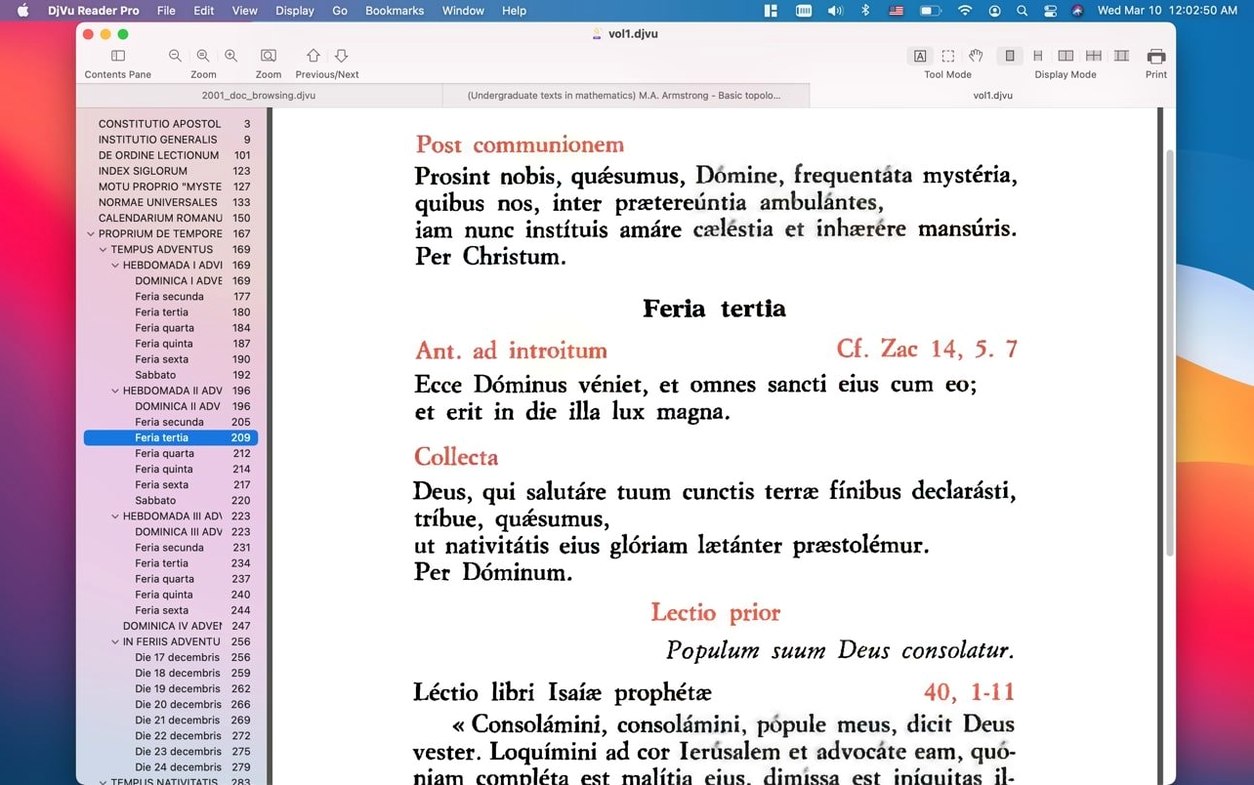
Page turning — flipping through a document is quick, no laggy re-draws. Useful when you're skimming a 300-page reference.
Thumbnail navigation — a sidebar of page previews. Click any thumbnail to jump straight there, much quicker than guessing a page number.
Reading settings — tweak the view scale to fit your screen or zoom into a diagram. Works in a window or full screen, so it stays out of the way until you need the whole display.
Library — the app can keep a list of your DjVu documents in one place. Handy if you collect a few of them and don't want to hunt through Finder each time.
Thumbnail sidebar handles hundreds of pages on older Macs
People often ask whether DjVu Reader Pro handles multi-page documents smoothly. Yes — the thumbnail sidebar and fast page turning are built for exactly that. Large files with hundreds of scanned pages work fine, even on older Macs still running Catalina.
Another worry is text search. If the DjVu file has an embedded text layer (most scanned books do), the Find Pane picks it up instantly. If it's a pure image scan with no text layer, search won't find anything — that's a limitation of the file, not the app.
Some folks wonder if the library feature means importing or duplicating files. It doesn't. The library just remembers where your documents live on disk. You can add a dozen technical manuals scattered across different folders, and the app keeps a tidy list without moving anything.
And yes, printing works from the first launch. No hidden print settings or export hoops — just File > Print, same as any sensible Mac app.
DjView lacks full-screen and library, DjVu Reader Pro fills the gap
DjView has been around forever as an open-source option. It's lightweight and cross-platform, but the Mac build feels its age. No native full-screen mode, no library, and the interface is stuck in 2010. DjVu Reader Pro tidies all that up with proper macOS windowing and a document list that doesn't rely on Finder tabs.
Okular (from the KDE project) opens DjVu among many other formats. That broad focus means it does a bit of everything but masters none — the DjVu-specific handling is basic. Bookmarks and a dedicated library aren't front and centre. DjVu Reader Pro strips things back to one format and does it properly, which suits someone who just wants to open a DjVu file and get on with reading.
MacDjvu is another Mac-native reader, but it hasn't seen updates in years. On recent macOS versions it can be flaky — occasional crashes, scaling glitches. DjVu Reader Pro is actively maintained and runs cleanly on ARM and Intel Macs from Catalina onward, no compatibility gymnastics required.
A practical tip: if you grab the app and it won't open, you're likely hitting Gatekeeper. Mount the disk image, open Terminal, and follow the bypass step included with the download. Drag the app into Applications afterwards and you're set.
It also prints without fuss, which is more than some lightweight viewers manage.
- macOS 10.15 (Catalina) or newer
- Works on both Apple Silicon and Intel Macs (64-bit)
Questions from the bench
Can DjVu Reader Pro open other file types?
No, it is built specifically for the DjVu format and does not open PDFs, EPUBs or other document types.





 Back up
Bench talk (0)
Sign in or get a library card to pin up a note.
Nobody has chimed in on this card. If you have used it on an old Mac, say which one.